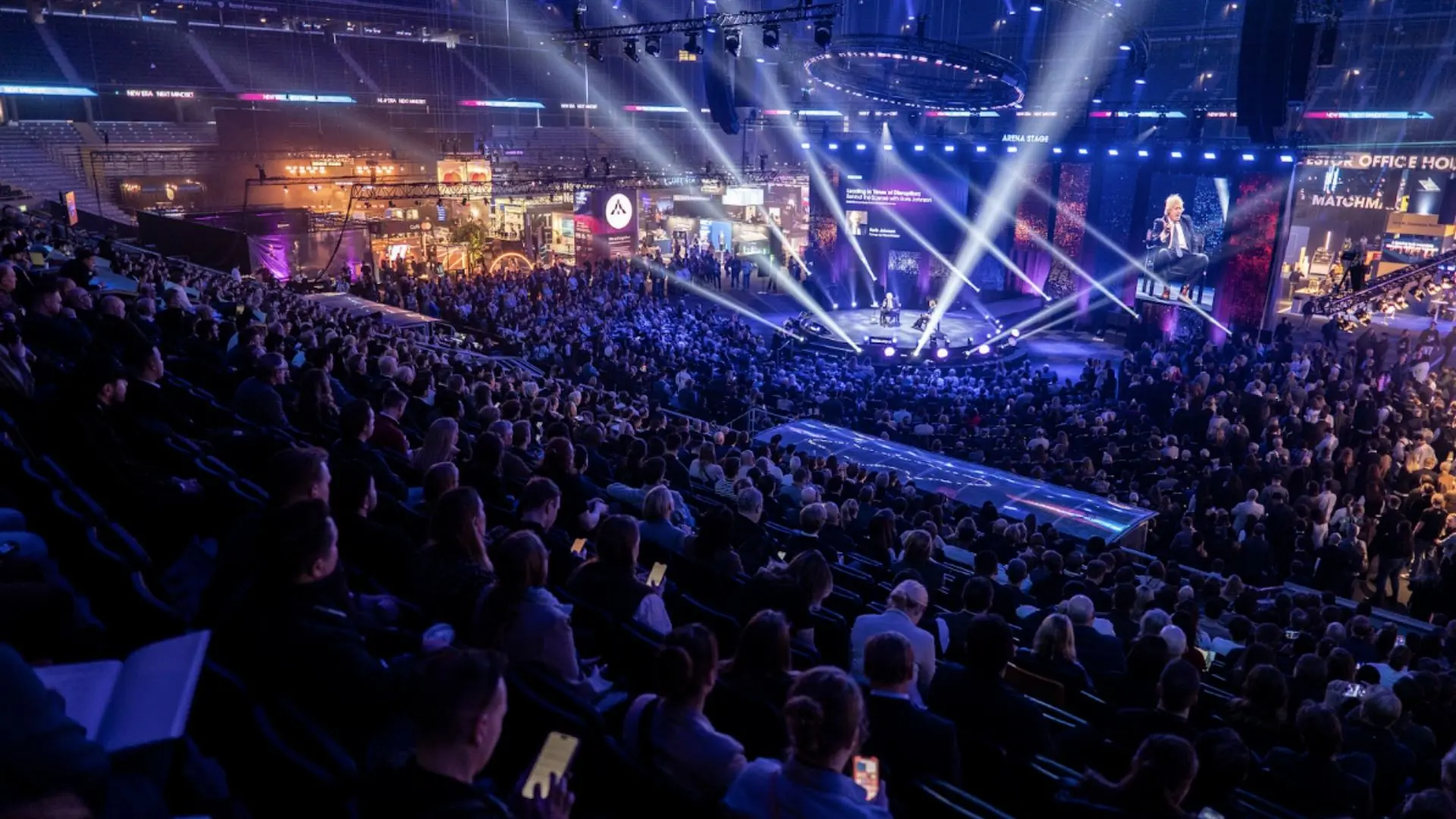
Stockholm’s Strawberry Arena once again became the center of gravity for innovation on February 11-12, 2026, as TECHARENA 2026 brought together founders, investors, business leaders, policymakers, and creators under the theme “New Era, Next Mindset”. With more than 10,000 attendees from 126+ countries, 300+ speakers, and a global delegation program aimed at connecting international ecosystems with the Nordic innovation scene, the event underscored several key trends defining technology and business in 2026.
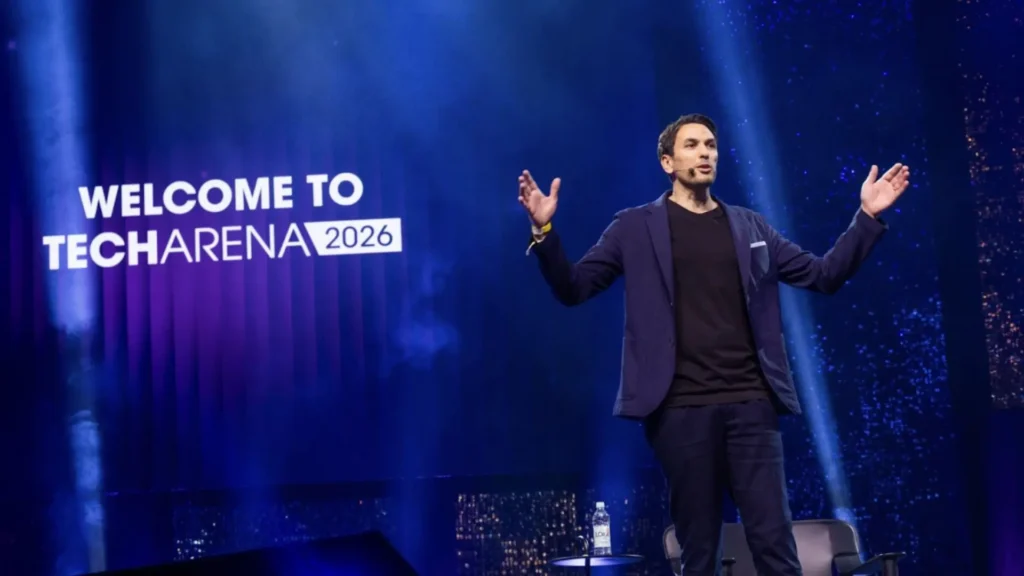
At TECHARENA 2026, one shift stood out clearly:
Europe brings talent.
The Nordics build tech.
The U.S. drives confidence. These words weren’t just a catchy line – they captured the heartbeat of the event. You could see it in conversations, workshops, and the energy buzzing across the floor. It became clear: winning in the next era of tech isn’t just about ideas, it’s about execution, courage, and collaboration.
Tech’s Purpose Scales Beyond Hype
Across panels and side events, the conversation moved well beyond excitement about individual tools or startups. The focus was clear: innovation must create measurable, lasting impact at scale. From responsible AI to deep tech’s societal role, TECHARENA 2026 reinforced that the next era of growth will be defined by sustainable transformation, not surface-level disruption.
One theme consistently intertwined with AI discussions was energy. The message was unmistakable: technological acceleration is inseparable from energy infrastructure. As Arthur Mensch, CEO & Co-founder of Mistral AI, put it, “AI is about transforming energy into intelligence.” It was a powerful reframing of the AI narrative. Behind every model, every inference, every breakthrough lies energy consumption and infrastructure. Intelligence at scale demands power at scale.
This is where Sweden’s position became particularly compelling. With only 1.6 percent of the country’s energy coming from fossil fuels, Sweden operates as one of the most fossil fuel free economies in the world, relying almost entirely on renewable and low-carbon sources. In the context of AI’s rising energy demands, that statistic is not just impressive. It is strategic. It positions the Nordic region as fertile ground for responsible AI growth and sustainable industrial expansion.
The connection between energy, innovation, and geopolitical stability was also emphasized at the policy level. Karl Nehammer, Vice-President of the European Investment Bank, reaffirmed this broader perspective, stating, “In financing green energy and life sciences, we gain freedom and democracy.” The implication was clear: investing in renewable infrastructure and breakthrough technologies is not only about climate or competitiveness. It is about sovereignty, resilience, and long-term economic independence.Speakers from diverse sectors, including Sweden’s Minister for Foreign Affairs and CEOs from major industrial groups, echoed a shared message. Technology must solve real-world challenges while strengthening economic systems and democratic values. At TECHARENA 2026, innovation was not framed as hype. It was framed as responsibility.
AI: Everywhere and Operational
Artificial intelligence has moved past isolated experiments. Discussions at TECHARENA made it clear that AI is increasingly seen as an operational backbone, not a standalone topic. Panels on AI and responsible innovation highlighted that, while generative AI continues to break new ground, true value comes from embedding AI into real workflows – from automation to decision systems and beyond. This reflects a broader trend across the industry in 2026: AI is transitioning from toolsets to systems that power business outcomes – a shift visible not just in the talks but in how founders and investors approach product strategy and scaling.
One memorable moment came from Zlatan Ibrahimović, whose simple mantra resonated across industries: “The older I get, the better I get”.
It wasn’t just about sports. It was a reminder that mindset, resilience, and continuous improvement matter as much as technology in achieving breakthrough results.

Collaboration Over Competition
One of the biggest takeaways from the event was the emphasis on ecosystem collaboration. TECHARENA’s international delegation program – which invited global founders and investors to explore the Nordic ecosystem – reinforced the idea that innovation thrives when ideas and capital circulate freely across borders.
Founders from Central and Eastern Europe, Scandinavia, and beyond took part in curated programming to connect with partners, investors, and potential clients. The message was clear: building globally starts with meeting globally.
Sweden is actively fostering this collaborative environment. Jessica Rosencrantz, Minister for European Union Affairs, highlighted reforms that have cut work permit processing from 100 days to just 18, while allowing permit holders the flexibility to change employers. These steps are designed to attract top talent and keep innovation flowing, showing that competition for global talent can coexist with openness and inclusivity.
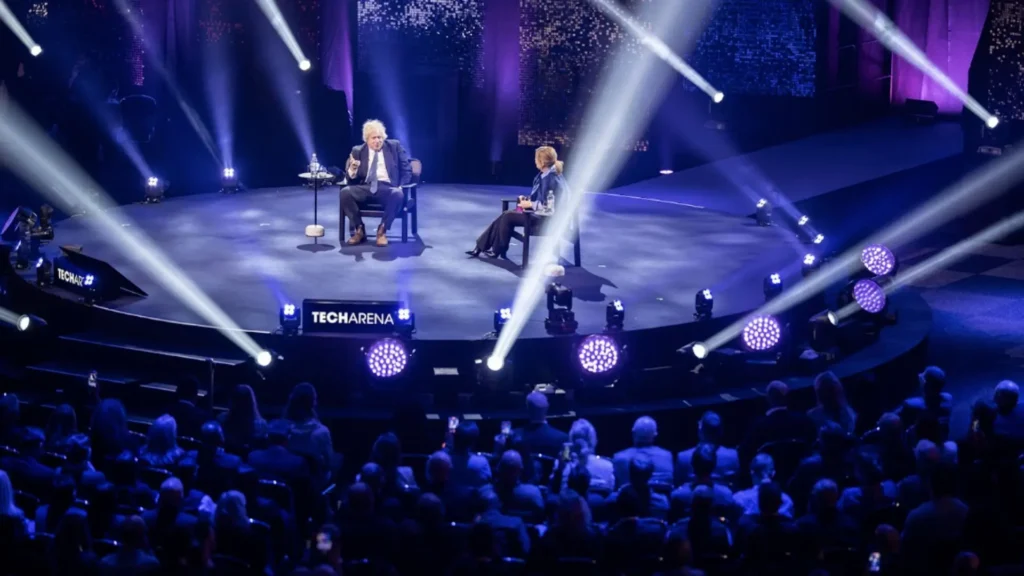
The conversation also touched on Europe’s place in the global tech race. Boris Johnson, Former UK Prime Minister – acknowledged that while Europe is a rising force, the United States remains indispensable, contributing heavily to infrastructure, defense, and technology. He argued that the solution is not isolation but building better tech domestically, gradually becoming competitive on a global scale.
Johnson also connected collaboration to leadership and societal challenges. He emphasized that decisive action, not optimism alone, drives success, and suggested that solutions to issues like overpopulation, climate change, and social inequality could be addressed by empowering women through education and opportunity. On a lighter note, he noted that AI could enhance human interaction and lift spirits, underscoring how technology and policy must work hand-in-hand.
Across both tech and politics, the message was clear: true innovation – and leadership – thrives when competition is balanced with collaboration, and global challenges are met collectively rather than in isolation.
Policy and Scale Must Align
Alongside the optimism around AI and scale, there was also a very real conversation about regulation, competitiveness, and execution. Sweden’s startup community is thriving, but many founders openly discussed the friction that comes with scaling in Europe. Talent mobility, regulatory complexity, and long decision cycles remain recurring hurdles for companies aiming to grow internationally.
Sweden’s Prime Minister Ulf Kristersson addressed this tension head on. “Don’t treat a country like a startup,” he said, underscoring that governance requires stability and long term responsibility. At the same time, he acknowledged a broader European challenge: progress can feel slow, weighed down by layers of regulation and cautious decision making. The concern is not regulation itself, but the risk of over regulating emerging technologies before they even fully exist, which can unintentionally dampen competitiveness.
The competitiveness gap was also highlighted from a wider European perspective. Peter Kyle, UK Secretary of State for Business and Trade, pointed out that Europe has struggled to produce trillion dollar technology companies, while the United States continues to generate them year after year. The takeaway was not a lack of talent or ideas in Europe, but a question of speed, capital coordination, and policy alignment.
The underlying message throughout TECHARENA 2026 was clear. Ambition alone is not enough. AI, deep tech, renewable energy, and life sciences all demand ecosystems where infrastructure, investment, talent, and regulation move in sync. Without that alignment, innovation risks stalling before it reaches global scale.
The real question raised in Stockholm was not whether Europe can innovate. It was whether Europe can accelerate.
Structural Shifts Over Short-Term Trends
The defining insight from TECHARENA 2026 is not that new technology exists, but that its integration into business is now essential. The focus was less on isolated innovation and more on how technologies create systemic change:
- AI driving decisioning, not just automation
- Cross-sector partnerships enabling scale
- Ecosystem-level connectivity accelerating growth
- Policy dialogue shaping competitive frameworks
These takeaways will matter not only for founders and investors but for every organization looking to compete in a rapidly evolving digital economy.
–
Looking ahead, the future will be written by those who can turn the promise of technology into sustained value creation. TECHARENA 2026 didn’t just showcase innovation – it made the case that the next phase of growth depends on collaboration, clarity of purpose, and structural execution.
*Photos from TECHARENA