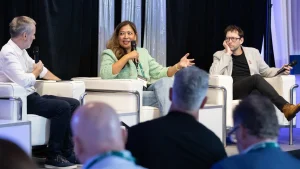
As short-form video reshapes how audiences consume content on their smartphones, micro dramas are rapidly emerging not only as a new storytelling format but also as a new business vertical in India. At our inaugural Meta Marketing Summit: Micro-Drama Edition, we shed light on the rising number of micro-drama platforms that are now actively using Meta platforms to reach relevant audiences, launch new shows, and build their business.
To capture the rise of this industry, we also unveiled a new audience research report developed in collaboration with media insights firm Ormax Media that examines how this category is evolving and how viewers are discovering and engaging with it.
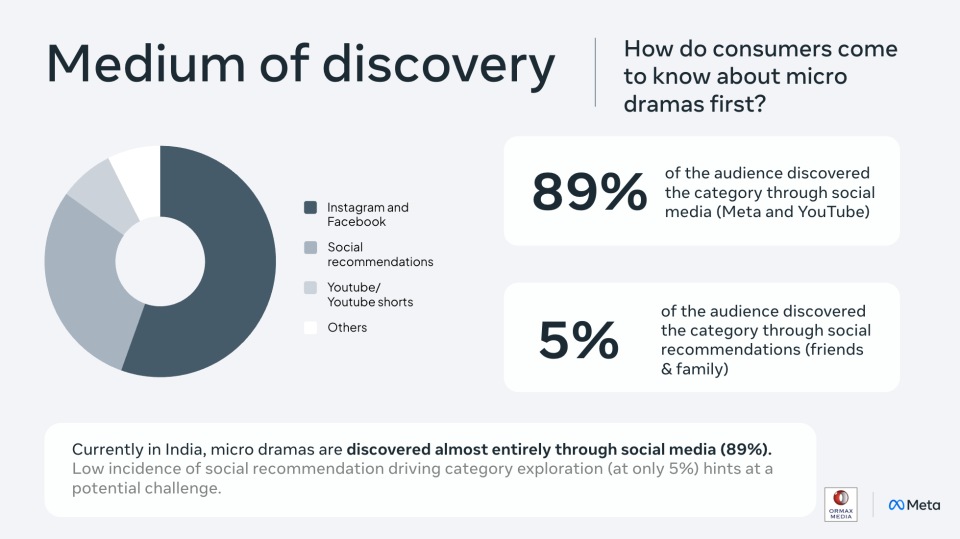
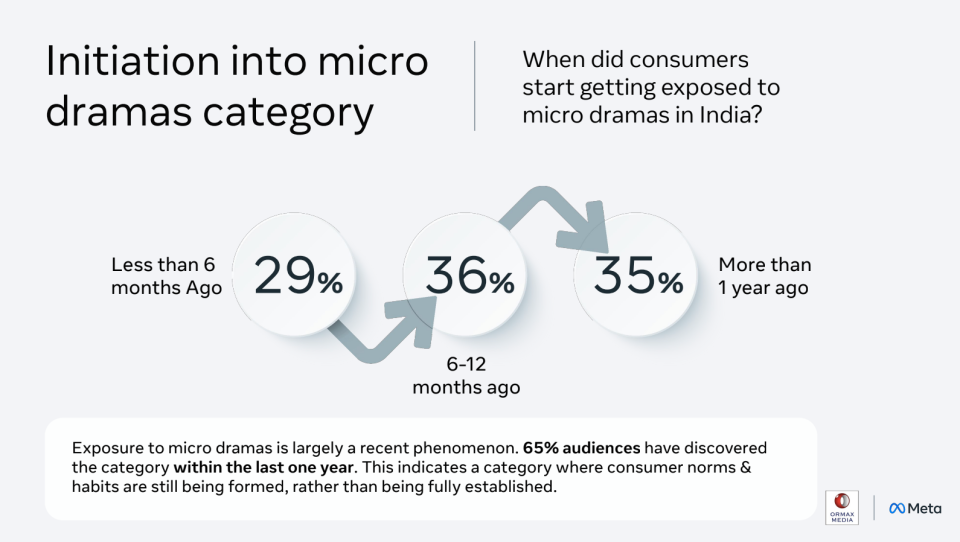
Titled “Micro Dramas: The India Story,” the report finds that 65% of viewers discovered micro dramas within the last year, and an overwhelming 89% of viewers discover micro dramas through social feeds, highlighting feed-led discovery and signalling the rapid rise of the format among digital audiences. Unlike traditional OTT viewing, micro-dramas are built around short, episodic narratives designed for smartphone consumption, where audiences encounter stories through social feeds rather than actively searching for them.
The study was conducted between November 2025 and January 2026, combining 50 depth interviews and 2,000 personal interviews with micro-drama audiences aged 18–44 across 14 states, making it one of the most comprehensive studies of the category in India to date. The findings were unveiled at the summit, where we brought together leading micro-drama platforms, creators, brands, agencies, venture investors, and payment partners to discuss the rapid rise of the category and the ecosystem needed to support its next phase of growth.
“Micro drama isn’t a passing trend — it’s rewriting the rules of Indian entertainment. In under a year, an entirely new category of platforms has emerged, built audience habits from scratch, and created a business vertical that is scaling fast. What makes this different from previous content waves is that the discovery engine is social — audiences aren’t searching for micro dramas, they’re finding them in the feed. Meta is at the centre of this growth, helping platforms reach the right audiences, launch new shows, and build sustainable businesses.” – Shweta Bajpai, Director, Media & Entertainment (India), Meta
“Micro dramas are beginning to show the early signs of becoming a distinct content category in India’s digital entertainment landscape. What makes this format interesting is not just the content itself, but the viewing habit forming around it – one that is deeply tied to mobile-first, personal-screen consumption. When a format aligns closely with how audiences naturally engage with their devices, it has the potential to scale very quickly. The signals we are seeing today suggest micro dramas could evolve into a meaningful new layer within India’s digital content ecosystem.” – Shailesh Kapoor, Founder-CEO, Ormax Media
A Mobile-First Format Built for In-Between Moments
Designed for short, episodic viewing on smartphones, the format allows audiences to engage with stories in quick bursts throughout the day, creating a new viewing habit built around flexible sessions rather than long-form commitments.
The report finds that viewers spend a median of 3.5 hours per week or approximately 30 mins per day watching micro dramas, typically across seven to eight short sessions. Viewing peaks between 8pm to midnight, with additional spikes during commutes and work breaks. This suggests that the format fills small pockets of time complements rather than competing with traditional OTT viewing.
It also notes that 57% of viewing happens in ambient mode, meaning audiences often watch micro dramas while doing something else, reinforcing the format’s lightweight, mobile-first storytelling format.
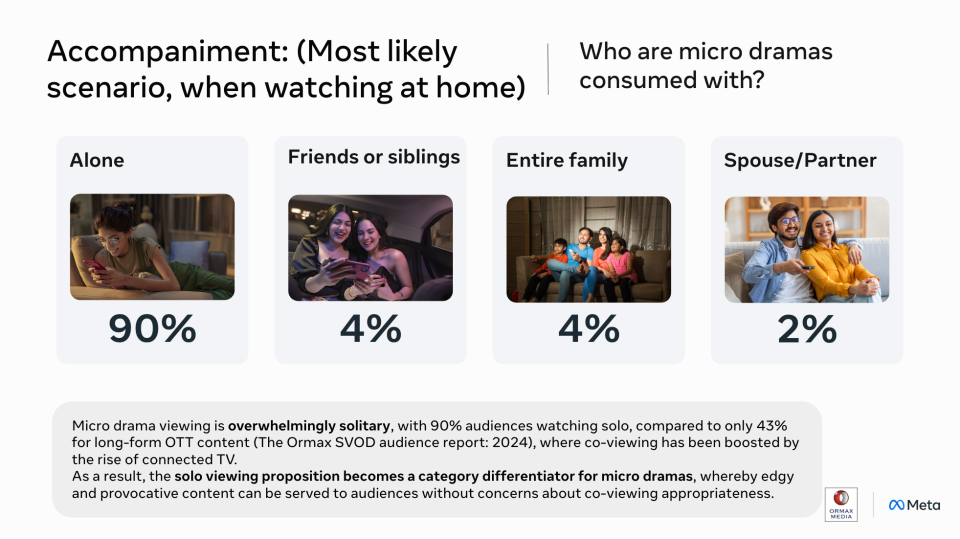
Solo Viewing is Enabling More Personal Storytelling
Another defining feature of the format is its highly personal viewing dynamic. 90% of micro-drama consumption happens solo, making it a private, personal-screen habit and giving creators room to experiment with more intimate or bold narratives.
Romance, family drama, and comedy currently lead genre preferences, reflecting the kinds of stories audiences gravitate toward during personal viewing moments.
The study also points to growing openness to new formats, with 47% of viewers describing AI-generated micro dramas as unique and creative, while only **6% say they would avoid such content entirely.
The study also points to a definitive rise in regional language micro dramas. After Hindi and English, Tamil, Telugu, and Kannada emerged as the top languages of micro-drama consumption as per the study.
As the category continues to grow, platforms that focus on building audience trust alongside compelling storytelling will be best positioned to unlock the next phase of growth.
Key Stats from the Micro-Drama Report:
- Micro dramas are a rapidly emerging content category in India: 65% of viewers say they discovered micro dramas within the last year, highlighting how quickly the format has taken off among digital audiences.
- Social platform feeds are the primary discovery engine for micro dramas: Nearly 89% of viewers say they encounter micro dramas through social feeds and recommendations, indicating that algorithm-led discovery is driving the growth of the category.
- Viewing behaviour is frequent but built around short, repeat sessions: Audiences spend a median of 3.5 hours per week watching micro dramas, typically spread across seven to eight short sessions rather than long viewing windows.
- Micro dramas are designed for in-between moments throughout the day: Consumption peaks during commutes, work breaks and late-night scrolling, reinforcing the format’s mobile-first nature and its ability to fit into small pockets of time.
- Micro dramas are largely a personal-screen viewing experience: Around 90% of viewers watch micro dramas alone, making it a highly individual and private content format compared to traditional shared TV viewing.
- Audiences are increasingly open to AI-generated storytelling: Nearly 47% of viewers say they find AI-generated micro dramas unique and creative, and 38% prefer real actors, reflecting familiarity rather than resistance.