Dear subscribers,
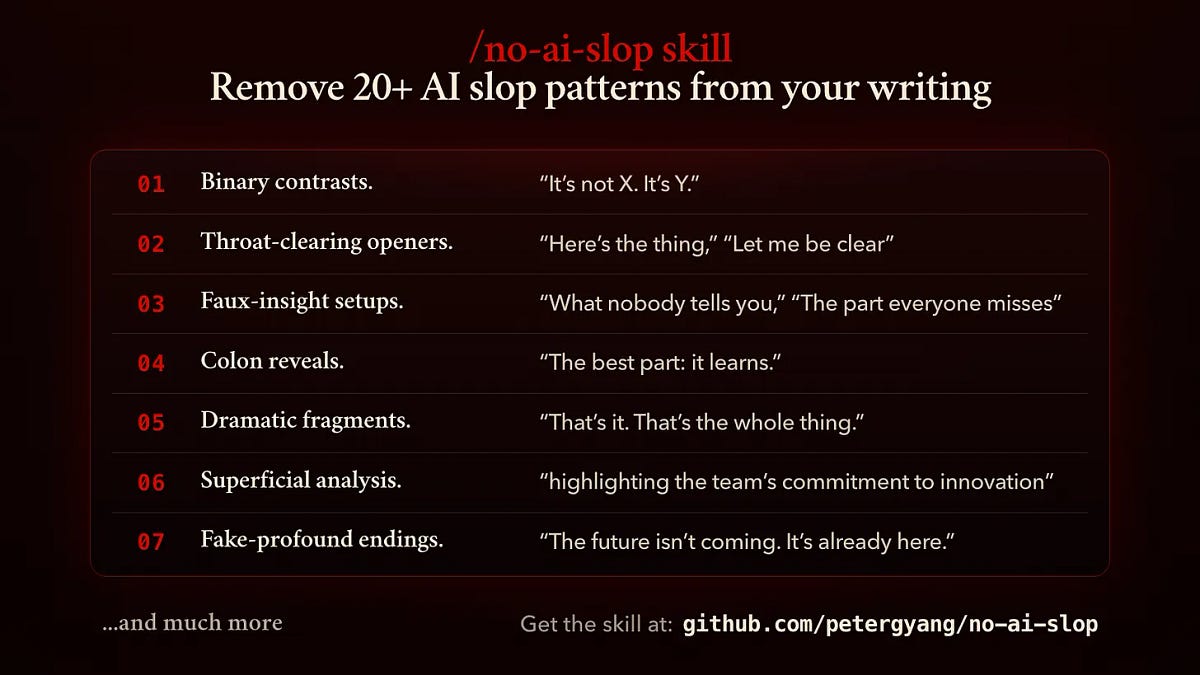
Today, I’m open sourcing my /no-ai-slop skill that removes 20+ patterns of AI slop from any piece of writing.
I use this skill to edit everything from emails to docs, and I think you’ll love it too.
If you find it useful, please consider starring the repository so more people can find it and upgrading to paid to get 12+ other quality AI skills I’ve made for personal advisor, agent-ready specs, viral social posts, and more. Keep reading for:
How to install and use the /no-ai-slop skill
My 25/50/25 rule for editing with AI
Why the dark side of slop is always calling
I’m proud to partner with Linear

I’m using Linear to manage my entire podcast production process with my video editors and it’s been great. With Linear MCP, I can create, edit, and track issues directly from Codex and Claude Code.
To install the skill, just paste this in Codex, Claude Code, or your favorite AI harness:
Then you can use it in three ways:
“/no-ai-slop (text)” to edit your writing. The skill will remove all the AI slop patterns and list what it removed.
“/no-ai-slop is this slop? (text)” to detect AI writing. The skill will list all the slop patterns that it found.
“draft an AI slop post (text)” for some fun. Use it to generate the most cringe slop as satire like my LinkedIn comment below:
Jokes aside, even the best AI models (e.g., Fable 5 and GPT-5.6) still use most of the slop patterns below that /no-ai-slop will remove:
Binary contrasts. “It’s not X. It’s Y.”
Throat-clearing openers. “Here’s the thing,” “Let me be clear”
Faux-insight setups. “What nobody tells you,” “The part everyone misses”
Colon reveals. “The best part: it learns.”
Dramatic fragments. “That’s it. That’s the whole thing.”
Superficial analysis. “highlighting the team’s commitment to innovation”
Importance puffery. “marks a pivotal moment,” “a testament to”
Weasel attribution. “experts agree,” “studies show”
Synonym cycling. “The agent handles your email. The assistant drafts replies.”
Fake-profound endings. “The future isn’t coming. It’s already here.”
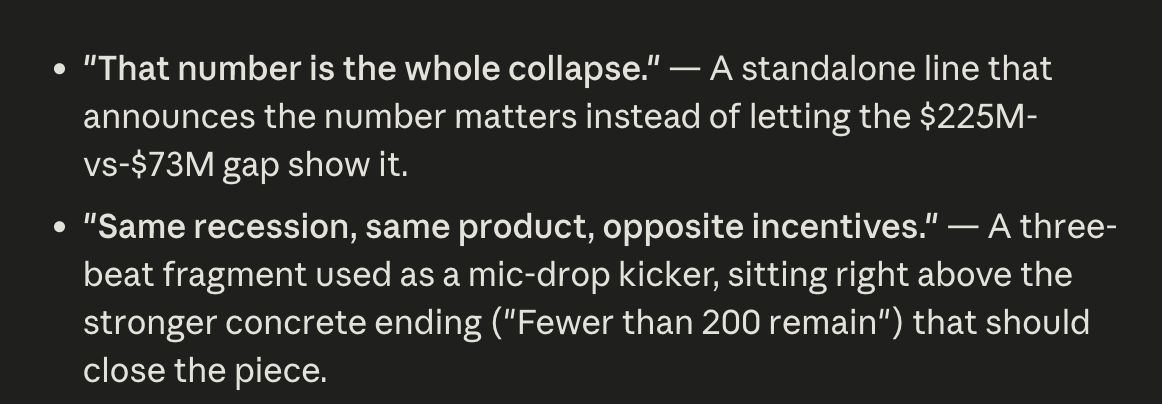
Here’s an example of using the skill to detect AI slop on a recent tweet I came across:
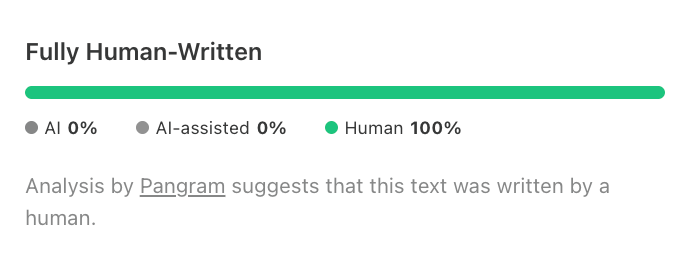
Substack just shipped AI slop detection to protect readers. They featured my video as an example of how to use AI to edit while still sweating the details.
Basically, I work with AI in the middle 50% of my writing and editing process:
First 25%: I start by voice dictating or writing a rough draft without AI.
Middle 50%: I use my /newsletter and /no-ai-slop skills to work with AI to clean up the draft. AI helps me find grammar mistakes, improve clarity, and more.
Last 25%: I manually go through the piece line by line to make edits without AI.
I’d like to think that the difference between a creator who pumps out slop and a creator who cares about quality is giving a shit about the first and last 25%.
This applies to building with AI too. As Kun (AI builder) shared in our interview, AI handles the middle 50% where most of the code gets written. But you have to care enough about the first 25% (using your taste to shape the requirements) and the last 25% (validating the work) to make a product great.
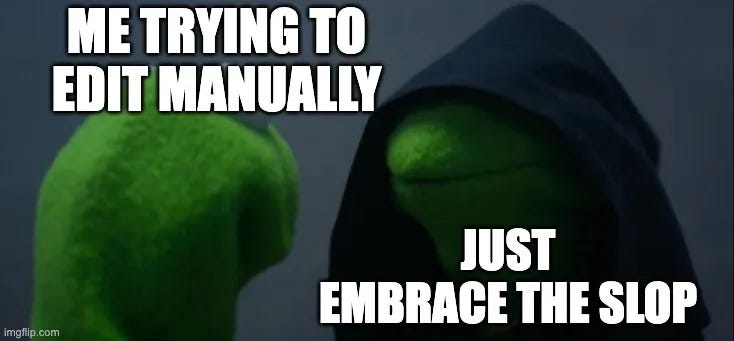
The dark side of just letting AI draft and edit everything is always calling:
It’s easier to just give AI feedback to edit than to do it manually. Products like Codex and Claude Code seem to actively discourage you from making manual edits to files.
It’s easier to just be lazy and not write at all if AI is not available. For example, I used to be productive on long flights. But lately, I’ve become too lazy to write or edit anything without having AI available.
Perhaps most depressing of all, pumping out slop can drive real results.
Without naming names, I’ve seen some creators publish 10 AI slop posts per hour, every day. Some of those posts go viral and bring them more followers and revenue. But I like to remind myself that:
People who know AI can see the slop coming from a mile away.
A post can perform while still costing you trust with the people whose judgment matters to you. Consider these two examples:
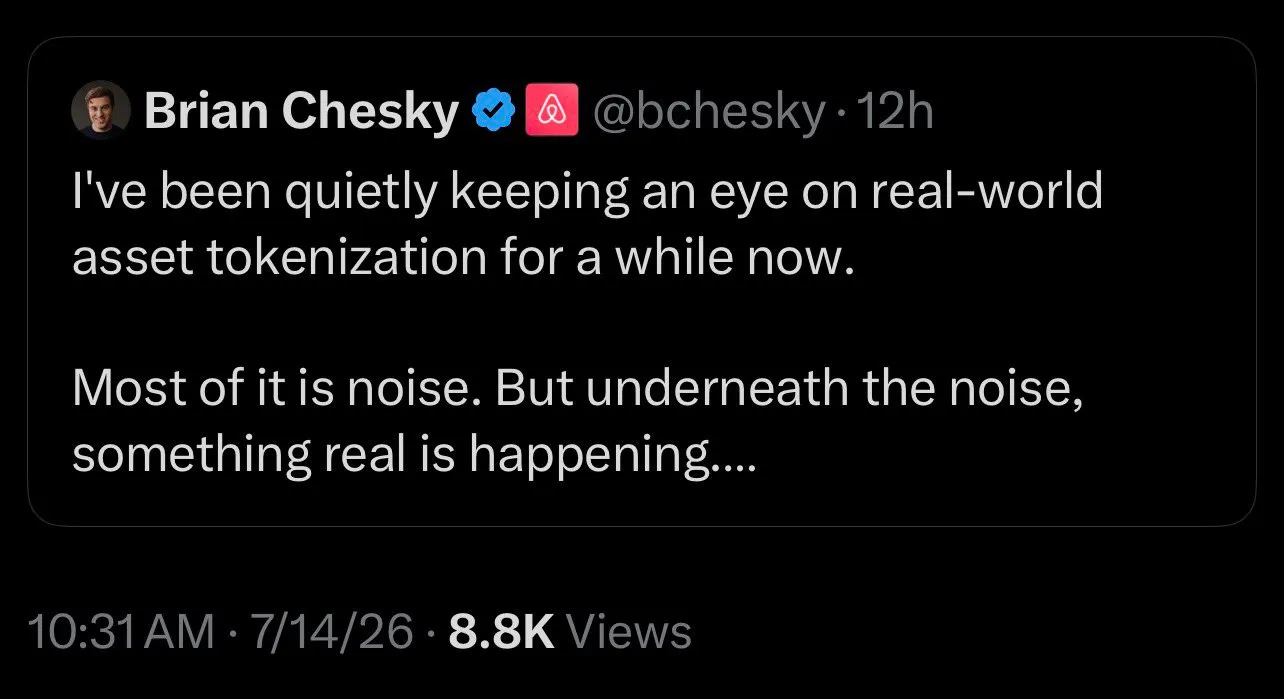
Brian Chesky’s account got hacked and posted an obviously AI generated thread. Readers spotted it as AI before anyone confirmed the hack.

My friend, Alex Cohen, wrote a letter to his employees highlighting that pumping out slop puts an unfair burden on the reader.
I’m not going back to editing everything manually, but I also don’t want to lose my ability to think or craft a sentence when there’s no Wi-Fi available.
So I’m going to hold the line at my 25/50/25 writing process. Trust is the only durable asset we all have, and slop hurts trust with the people who matter.
Get my free /no-ai-slop skill on Github and let me know what you think!