A medical breakthrough only matters if it can help real people. Our research demonstrates that machine learning models can help support disease detection as well as alleviate the administrative workload so providers can focus on care.
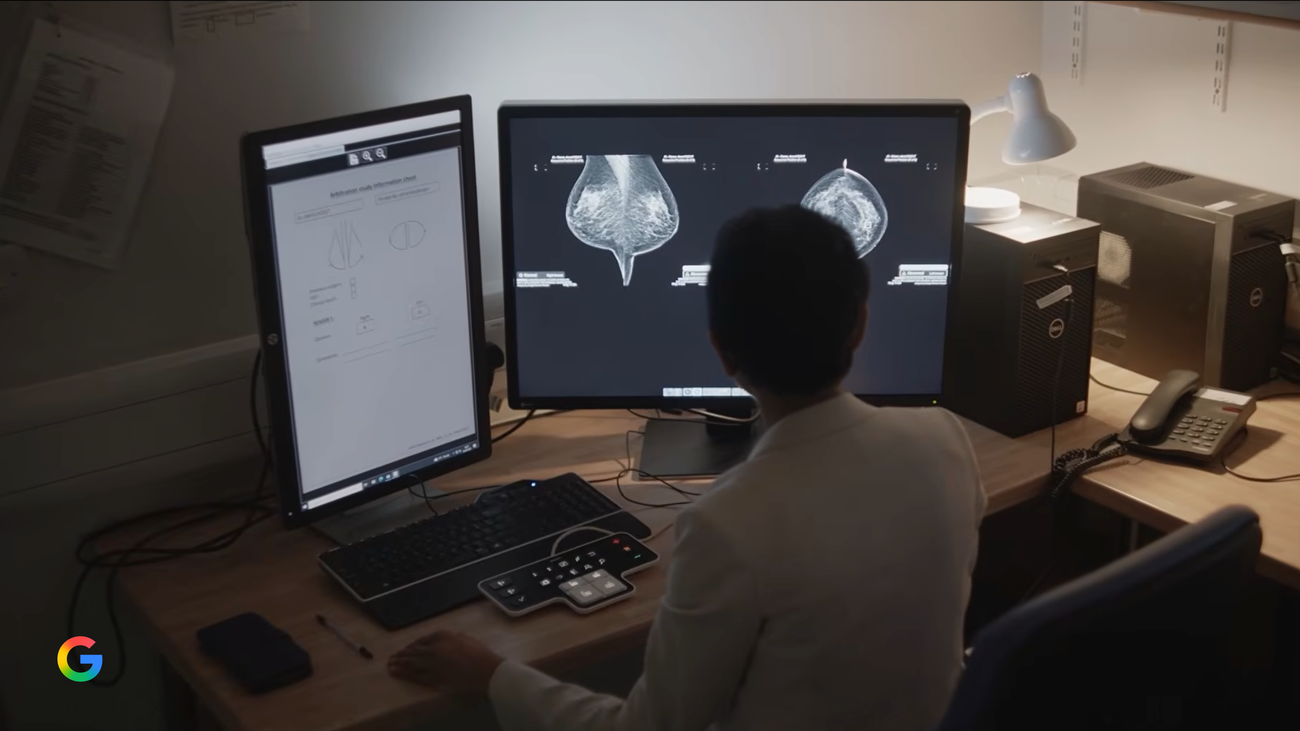
- Flagging historically missed cancer signatures: In a pair of studies published in Nature Cancer in collaboration with Imperial College London and the UK’s National Health Service (NHS), we evaluated a mammography screening system across 125,000 women. The system caught 25% of historically missed interval cancers while showing the possibility of reducing specialist reading workloads by up to 40% — which could help provide crucial relief to healthcare systems facing severe radiologist shortages.
- Uncovering hidden pediatric leukemia mutations: When applied by Children’s Mercy Hospital to previously sequenced real-world childhood leukemia cases, DeepSomatic confirmed all known variants while detecting 10 previously missed mutations — despite the challenge of working with a tumor-only sample. DeepSomatic is publicly available and has the potential to inform clinical judgments around patient risk and targeted treatments.
- Predicting global flu surges: A Google flu forecasting model was ranked #1 by the Centers for Disease Control (CDC) for predicting flu-related hospital admissions during the 2025–2026 season. Developed using our Empirical Research Assistance tool, the model outperformed 38 other systems to accurately match observed hospitalizations, showing how the technology can help public health officials anticipate demand for medical services and better prepare for seasonal outbreaks.
Better health within reach for everyone
Transforming health requires scientists, researchers, and institutions working hand-in-hand. That’s why we equip the science community with the advanced models and open-access platforms to fuel breakthrough research — along with the philanthropic funding and computing power they need to apply that research.
Through Google.org, we’re supporting organizations like the Infectious Disease Institute at Makerere University to forecast malaria drug resistance mutations with AlphaFold and AlphaMissense, and the University of Pennsylvania, using AlphaProteo and AlphaFold to help design novel cellular therapies that can augment the treatment of solid tumors and complex diseases. In 2026, Google.org has provided over $60 million to organizations around the world that are applying advanced models to transform how we understand and treat diseases.
By meeting disease at every stage, we can turn the most intractable human health challenges into actionable solutions, helping people everywhere live longer, healthier lives.