
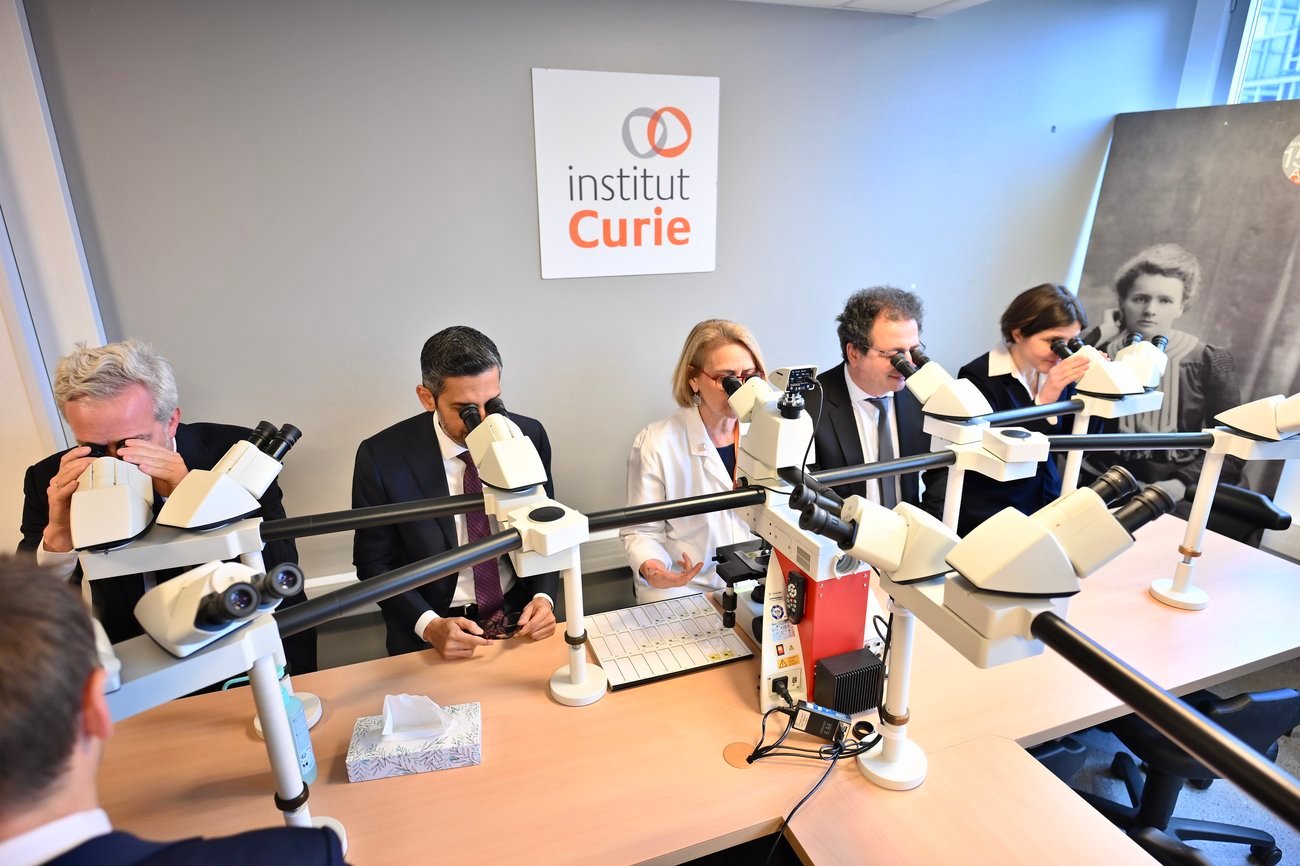
We believe that technology has the potential to transform healthcare and improve the lives of people around the world. That’s why, today, we’re announcing a new partnership with the Institute of Women’s Cancers, which is founded by France’s world-renowned cancer research and treatment center Institut Curie; Université PSL (Paris Sciences & Lettres University), the leading research university in France; and Inserm, France’s National Institute of Health and Medical Research. This partnership will involve research into how AI tools can help better address cancer, along with sharing helpful, science-based health information and supporting postdoctoral researchers with funding. Together, we’re embarking on a journey to revolutionize the fight against cancer, particularly focusing on difficult-to-treat women’s cancers like triple-negative breast cancer.
Meeting the urgency of the challenge
Breast and gynecological cancers have a devastating effect on women around the world. Breast cancer diagnoses are prevalent, with almost 60,000 cases annually in France and more than 2 million women diagnosed globally in 2022, according to the most recent data available. And some gynecological cancers, like cervical cancer, are among the most common women’s cancers worldwide.
Understanding these complex diseases is challenging, yet essential to reducing death rates.
That’s why we’re proud to support the new Institute of Women’s Cancers in its mission. By leveraging the combined expertise of Institut Curie, Université PSL and Inserm, the Institute is uniquely positioned to drive large-scale research to explore the origins of tumors, their evolution over time and the specific characteristics of rarer and more complex cancers.
Applying AI’s power to cancer research
This new partnership combines Institut Curie’s world-class expertise in research and medicine with Google’s advanced AI capabilities: we’ll research how AI-based tools can help predict the progression of cancer and the risk of relapse for each patient, with the goal of developing more precise and effective treatments.
We’ll also explore the identification of new biomarkers that can predict which patients will benefit from specific therapies, especially where current treatments are not always effective.