
Content is a key to successful media monetization, but not all content brings about money to publishers. It is important to make advertising content more meaningful and informative, but many marketers believe that such video content doesn’t generate revenue. However, experienced advertisers have concluded that monetization with intent really works.
If you put effort into making your content drive engagement, it may also unlock different revenue sources, too. But what kind of content really works? Modern customers’ attention is mainly attracted to connected TV, social media, and other digital video content. They can become a great source of monetization if you choose the right advertising strategies.
Let’s discover the most effective video ad monetization strategies for 2026 in this blog post.
The Video Market in 2026: Key Trends and Numbers
The power of video seems immeasurable! It encourages strong audience engagement and leaves a lasting impression on the majority of viewers, so it isn’t surprising that only 3 seconds of ad exposure can increase brand awareness by 47%. However, it isn’t the only convincing statistic that says a lot about the modern video market trends.
- Video is one of the most-watched types of advertising nowadays. An average person spends more than 17 hours a week watching online videos, and we can spot an explosion in the connected TV ecosystem – 9 in 10 American households have a CTV device at home.
- There is a 20% – 30% growth in free ad-supported streaming television channels, including leading over-the-top platforms. It wouldn’t be a discovery that short forms like Reels, Shorts, and TikToks dominate over longer ones, while users tend to prefer live and sports-driven videos nowadays.
There are many reasons why video content is worth investing in, and you can learn more about them here. But all these facts show that the video market is developing at an incredible speed, and it would be a mistake to neglect this powerful marketing tool.
Top Video Ad Monetization Strategies
Video has strong monetization potential, but the audience won’t watch everything you offer. It is a mistake to produce simpler content or run more ads since they don’t provide the desired level of monetization. You should have a clear understanding of the ad formats that align with your customers, when a video delivers the highest ROI, how to balance user experience and ad load, and how to develop a monetization system that works effectively across many campaigns. These strategies will help you achieve these goals and earn income from most video ads.
Subscriptions for depth
Offering increasing levels of value, access, and insights through tier subscription allows monetizing more efficiently. You should make a more detailed analysis, offer premium features, advanced tools, and insider information.
It isn’t a secret that advertising brings attention and turns it into a long-term income. When you create tiers, you get three important benefits: a customer lifetime value, brand loyalty, and upsell potential. Depth creates commitment and offers stability with a regular income!
Sponsorships for reach
If you need a quick audience expansion, credibility, and rapid awareness, sponsorship for reach is a perfect strategy. Placing your brand inside the content, which is already watched by people, gives a range of benefits. When you utilize the success of YouTube creators with niche audiences, Instagram influencers, and ESPN broadcasts, for example, you can insert sponsored integrations and make ads more organic, get more views, and avoid ad blockers. Moreover, creators manage to develop parasocial trust with their viewers and make sponsorships powerful by visual memory, repetition, and audio reinforcement.
Affiliate and commerce video for intent
The main goal of this strategy is to capture people who are already close to making a purchase and immediately monetize that intent. It combines affiliate marketing, intent-based targeting, and commerce-focused video. They usually include short product reviews, comparison with other similar products, lists of the best products with a high ranking of the product for sale, and offer solutions to problems. Using such videos, you can monetize via affiliate links, in-platform shopping, creator storefronts, Amazon commissions, brand deals with performance bonuses, and others.
Licensing for long-term value
When it comes to licensing for video advertising, you should keep several key aspects in mind. They include acquiring rights for long-term content use, reusing high-performing videos across different channels, securing content legally, and repurposing influencer or user-generated content. The licensing strategy allows you to turn creative content into assets used across multiple platforms and ad types, including paid ads, organic posts, email campaigns, TV spots, etc. You don’t need to produce new content repeatedly, and can get a range of other benefits, including multi-platform distribution and extended usage windows.
Ad Monetization Tactics
Now it is time to pay a closer look at the steps advertisers take to achieve better monetization results.
CTV and OTT Monetization
Connected TV and Over-The-Top platforms like Netflix, Amazon Prime Video, Disney+ + and others support different monetization options. Mainly, these are traditional monetization models, including:
- Ad-supported video on demand, which can be free or low-cost.
- Subscription video on demand.
- Transactional video on demand, where you get paid per view.
- Hybrid video on demand, when you get a subscription and get paid for watching ads.
- Free ad-supported streaming TV.
Learn more about the top 10 CTV ad platforms in 2026!
In-stream Vs Non-Linear Ad Formats
When it comes to ad formats, it makes sense to choose from in-stream ads, which can be displayed before content starts, while watching it, or when it finishes, and non-linear ad formats, which don’t interrupt streams by introducing overlay, pause, interactive, and companion ads. In-stream ads are characterized by the inability to skip them, high viewability, and a brand-safe environment. In contrast, non-linear ones feature higher engagement, direct response potential, and lower disruption.
Dynamic Ad Insertion
A popular approach that shows higher fill rates and strong targeting capabilities is Dynamic Ad Insertion technology. It inserts ads into video streams based on viewer data and supports two types: server-side and client-side ad insertion. This method offers a range of benefits, including supporting the delivery of personalized ads, reducing the effectiveness of ad blockers, and improving measurement and attribution.
Monetizing Live and Sports Content
Live sports events attract a huge audience and feature a very high real-time engagement rate, so advertisers can’t miss the opportunity to reach such a large and highly engaged audience. Therefore, they utilize different monetization tactics, including premium mid-rolls, which look like natural breaks, use of targeted OTT ads, sponsorship integrations, addressable ads, and interactive features.
Short-Form and Social Video Monetization
It isn’t a secret that earning money from short videos can be even more effective than doing so from videos over 90 seconds. The best destinations to monetize short videos are naturally TikTok, YouTube Shorts, and Instagram Reels. Platforms add videos between or around videos, sharing a portion of their revenue with creators. The conversion of virtual gifts via monetization may take place on the basis of views, engagement, performance metrics, brand sponsorships, affiliate marketing, by converting virtual gifts into real money or selling products and services. There are several important features of this monetization type:
- Vertical video formats. The most popular video format for social media and short videos is full-screen mobile-supported videos with a 9:16 ratio. They provide better ad visibility and are native to user behaviour.
- In-feed, rewarded, and interactive ads. marketers prefer these ad types for their native benefits. In-feed ads appear inside content, blended with organic videos, so they don’t look disruptive and have high click-through rates. Rewarded ads have high completion rates and strong advertiser ROI because many users agree to watch ads in exchange for a benefit. Interactive ads are more engaging and have higher conversion rates because they offer interactive experiences such as polls, playable demos, swipe-ups, and more.
- Creator-driven monetization models. Many creators offer their own monetization models, getting income for sharing ad revenue, brand sponsorship, affiliate marketing and gifts. This type of ad works very effectively since people tend to trust creators more than traditional ads, so it makes sense to collaborate with influencers and generate more ad revenue.
Retail Media and Commerce-Driven Video
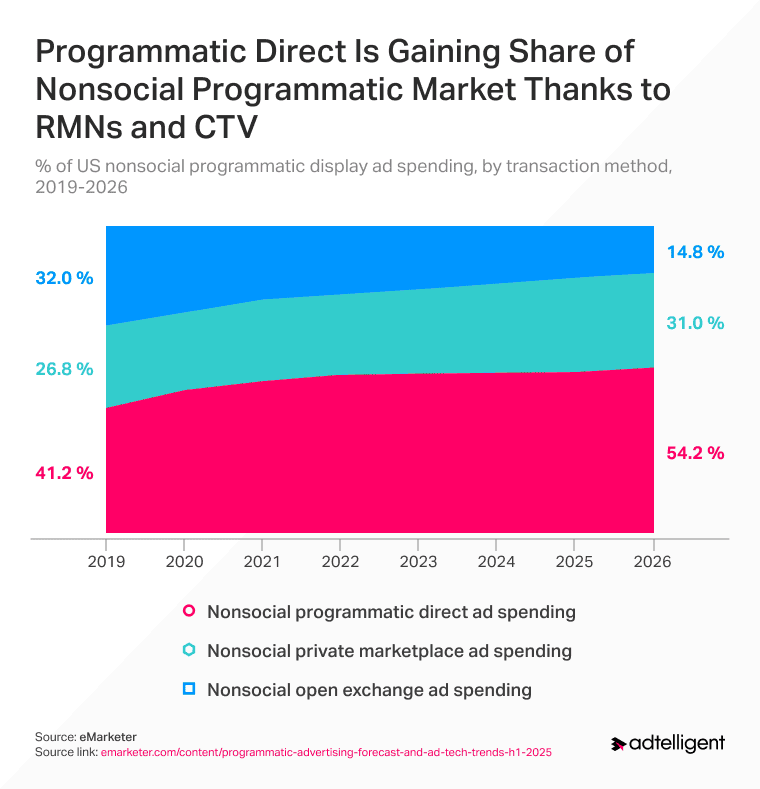
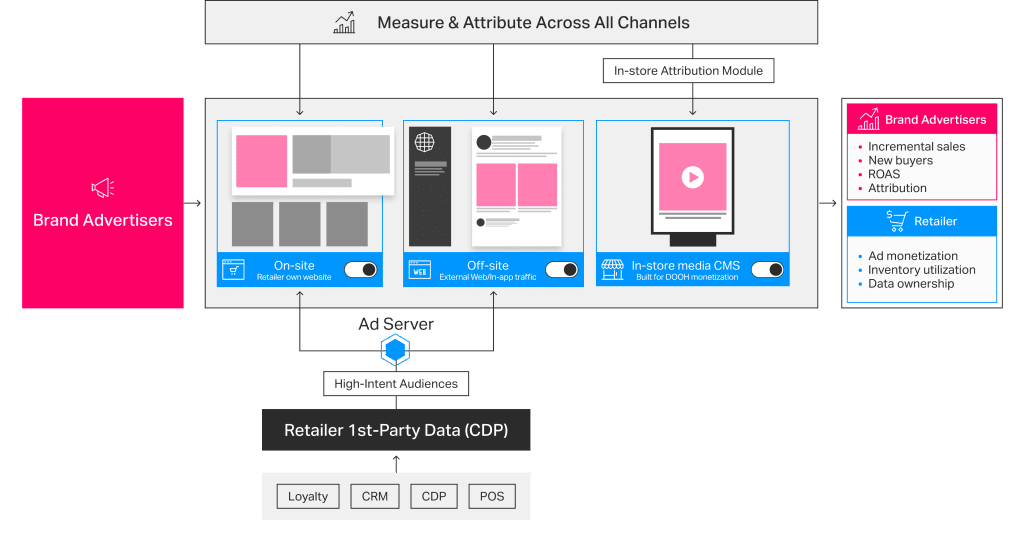
This monetization strategy involves using video ads within shopping platforms and other retail ecosystems to drive more immediate purchases. Brands use retail platforms such as Amazon, Walmart, and Target and display ads next to product listings or search results to drive clicks and spur impulse purchases. There are also retail media solutions providing technology to manage inventory and monetize ads. It is a great way to drive measurable sales in a short period of time. How does it work? There are three aspects to keep in mind.
- Shoppable video and commerce signals. You can watch videos with clickable links. They take customers directly to the shopping page and appear on their browsing history, cart activity and previous purchases.
- Retail media video placements. There are videos that are placed inside retailer marketplaces and aim at capturing consumers who are on the point of buying something. They use retailer first-party data and target high-intent buyers.
- Performance-based video formats. Some videos are optimized for measurable outcomes such as clicks, sales, app installs, or conversions. They usually have strong CTAs and include CPA. Their goal is to track results and maximize ad return.
How Identity, Privacy, and Addressability Help
It isn’t a secret that such three elements as identity, privacy, and addressability make video ads more goal-oriented, valuable, and measurable. Naturally, leads to an increase in ad revenue as well. Let’s take a closer look at each point to understand its significance.
- Identity. These solutions help recognize users across different devices and platforms, enabling the identification of potential customers and avoiding ad overexposure.
- Privacy. Modern advertising strategies should adhere to privacy laws and platform policies like GDPR, for example. Therefore, it is important to follow the strategies of consent management, data anonymization, and contextual targeting. It is a way to gain user trust and reduce legal risk.
- Addressability. It is vital to deliver ads to the audience in a measurable way to achieve a better performance and a higher advertiser demand.
All these elements focus on three key foundations. The first one is the use of third-party data strategies, which allow collecting different data from the audience. By enabling viewer segmentation, you can improve the video ad personalization and increase CPMs.
Secondly, contextual targeting allows showing ads based on viewed content and cohort-based targeting groups users by similar behaviour and interests. It makes it possible to remain relevant without relying on personalization.
Thirdly, measurement approaches focused on privacy improve the effectiveness of advertising campaigns. Therefore, it is important to promote aggregated reporting, clean rooms, consent-based analytics, and conversion.
Measurement and Optimization
Effective video ad monetization isn’t connected only with serving advertisements. It is important to measure the accuracy, control the quality of traffic, and validate performance carefully. There are several characteristics to consider when you work on content optimization.
- Attention metrics measuring engagement.
- Viewability measuring the number of times the ad was actually watched.
- Outcome-based metrics tracking conversions, sales, and ROAS.
- Attribution determines which ad exposure resulted in conversion.
- Incrementality measuring the true lift.
- Fraud prevention and quality controls that include the detection of invalid traffic, bot filtering, running brand safety checks, and verifying viewability.
Technology Stack for Video Monetization
Experienced marketers know that it is impossible to achieve video ad monetization goals without a set of technologies needed to optimize and measure the success rate. It goes without saying that this stack can be rather extensive, but it should definitely have the following tools:
- Supply-Side Platforms like Google Ad Manager, Magnite, Adtelligent, etc., help publishers sell video ad inventory programmatically. Their role is to manage ad inventory, run auctions, and optimize yield.
- Demand-Side Platforms help buy video ad inventory programmatically. These platforms handle audience targeting, real-time auction bidding, and campaign optimization toward their KPIs.
- Data and identity integration tools collect and analyze first-party data like logins, viewing behaviour, and subscription data, and identity solutions like UID 2.0, ID5, or myGaru that improve targeting accuracy and enable cross-device distribution.
- AI-driven optimization and forecasting tools include yield optimization, predictive forecasting, and real-time optimization to achieve different monetization-related goals.
Common Monetization Mistakes to Avoid in 2026
It goes without saying that you won’t find a universal monetization approach due to the ever-changing marketing industry. However, it is important to develop your video ad monetization strategies without mistakes. These are the most common examples of mistakes you should avoid in 2026.
- Overloading ads instead of stacking value. When you add too many advertisements to content, you might have a short-term increase in revenue, but it will also lead to a spoiled user experience. You will gradually spot a growth in drop-off rate and loss of audience loyalty. Therefore, it is important to have a balance in ad density and content quality.
- Monetizing volume instead of outcomes. When you ignore viewability, conversions, and engagement, you get lower CPMs in time. It is necessary to focus on quality if you want to generate long-term revenue.
- Ignoring trust and audience fatigue. Ads that look intrusive, irrelevant, and repeated lead to audience fatigue and avoidance of ads at all. Therefore, you should deliver only relevant ads and protect the viewer experience to retain your customers.
What to Prioritize Moving Forward?
Advertisers who plan to utilize video content to promote brands and get revenue via monetization should understand that their main focus should be on the audience. It is crucial to maximize the lifetime value and prioritize performance over impressions. Other important aspects to keep in mind are data resilience, automation for more scalability and margin, as well as diversification to protect potential revenue.
FAQ
What video ad monetization strategies work best for new or early-stage publishers in 2026?
Early-stage publishers prefer to use ad-supported video on demand and out-stream ads. They use mobile-friendly video formats, leveraging programmatic demand and contextual targeting. They are likely to build hybrid strategies and expand into OTT and CTV.
What is the easiest way to start monetizing video content with ads?
The easiest way is to use platforms that deliver ads and revenue without the necessity to own a separate ad server and tech setup. You can start on YouTube and other social media platforms, such as Facebook, Instagram, and TikTok.
If I’m a small online media, which tools or platforms should I choose first to monetize video?
Since your goal is to monetize videos quickly and efficiently, you should start with the YouTube Partner Program, Facebook and Instagram in-stream ads, TikTok Creator Service, and OTT/CTV platforms like Roku, Hulu, Amazon Prime Video, etc.
As a growing or large media company, what should be the first step to scale video ad revenue?
The first step you should take is to develop a clean, centralized revenue infrastructure.
What should publishers look for when choosing a video monetization platform or SSP?
There are several aspects to consider when you choose a video monetization platform. They include yield, control, transparency, and scalability. We recommend contacting the experienced SSP team to adjust your video ad monetization strategy to your resources and deliver the best results.
#ad server#CTV#digital advertising#programmatic advertising#publishers#retail media#ssp#video ads