How Liquid Death honed audience strategy, and what other brands can learn from them.
There’s a question worth asking about Liquid Death that most case studies struggle to phrase.
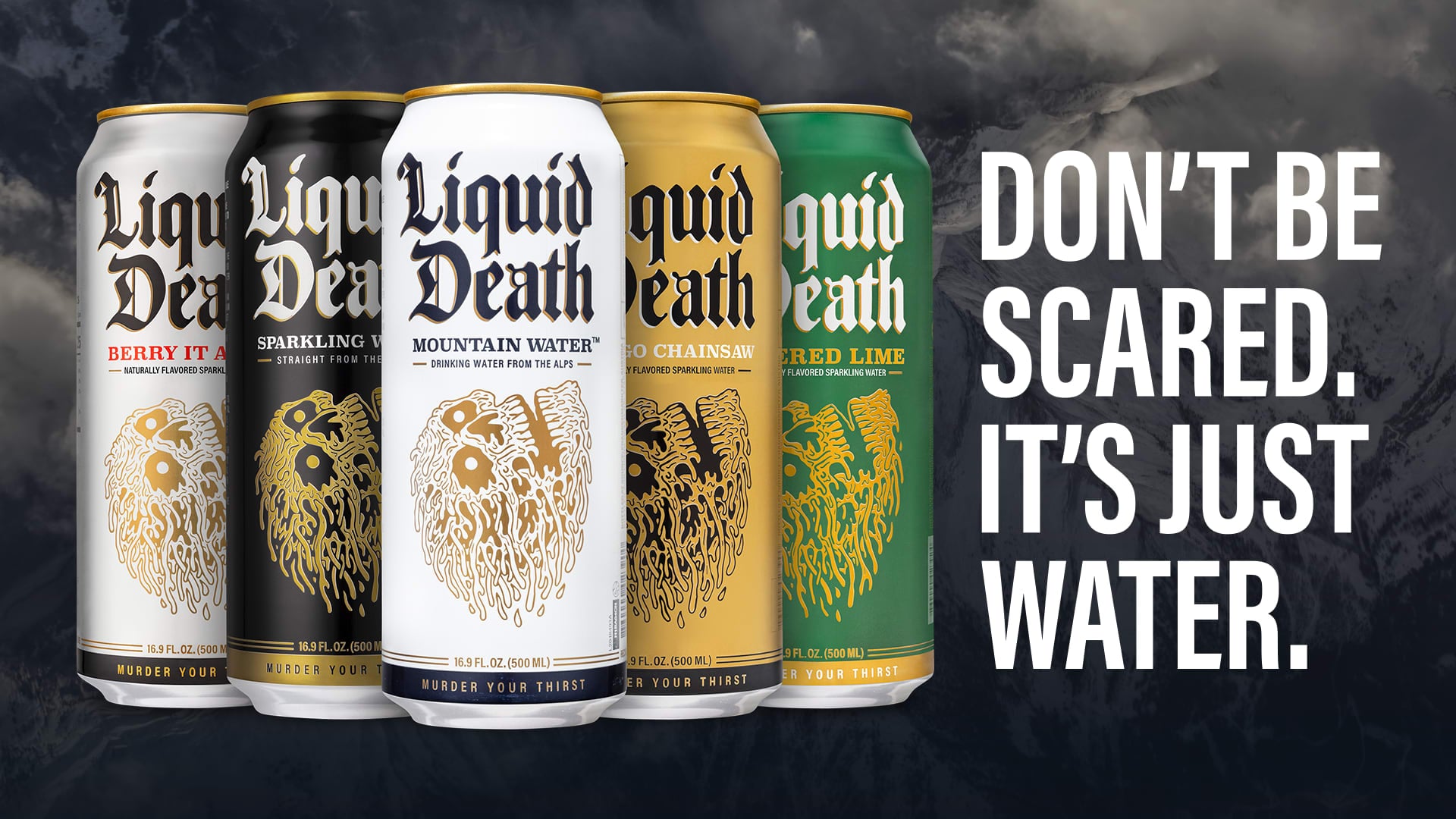
For one thing, you can’t mention Liquid Death without the skulls, the heavy metal fonts, or the “Murder Your Thirst” tagline. They’ll show you Tony Hawk’s blood pressed into a limited-edition skateboard, an album assembled from online hate comments, or a visibly pregnant woman pounding what looks like a beer.
They’ll call it shock marketing, disruption, Gen Z bait, but what they miss is what founder Mike Cessario actually built. He didn’t just start a water brand with edgy marketing; he built a marketing concept based on a certain type (or types) of consumer, which then needed a container to live in and a product to deliver.
The water was almost beside the point. It was the last important piece. His impetus was his intended audience and its aesthetics; the vessel that could bear its standard came next.
The Audience Focus Wasn’t What You Think
The most obvious read on Liquid Death’s target audience is millennials and Gen Z. This is basically correct, but that’s not where the marketing story started. Age is only a demographic. What Cessario actually identified and zeroed in on was the attitude.
Before the product was in production, before there was a SKU, a retail relationship, or a supply chain, Cessario ran a Facebook ad for a brand that didn’t exist yet. The response told him the audience was real and waiting. It was audience-first strategy in its purest form: Call out to your supposed segment first and make sure they exist before any marketing research deep-dives.
The results speak for themselves: This audience was real, and they were about as anti-establishment as he thought they were. He found a far-reaching phalanx of folks fatigued by perceived false sincerity in marketing. These people had all been squawked at so relentlessly by brands performing what has become perceived as feigned social consciousness that they’ve developed an immunity to that kind of messaging. They still wanted to make healthy and socially responsible choices, but they have become fed up with being condescended to in order to make them.
This “Attitude” segment cuts across age, income, and geography. It lives at the unlikely crossroads between concerts and skate parks and pop-up bars and Whole Foods, sometimes traveling between all of them in the same day. They are ironic, but not nihilistic; subversive, but not destructive; allergic to brands that take themselves too seriously, but highly interested in ethical and health-conscious consumption.
Cessario understood that if you created a brand that was a rallying cry against performative marketing, these people would flock to it. The can was the dais from which the brand garnered its support.
What Happened Next Is the Actual Case Study
Here’s where most brand stories stop: Define the audience, build the brand, run the campaigns. But Liquid Death kept going. The attitudinal audience was, and is, the entire focus.
Strategy
The brand identity, the name, the packaging, the tone: All came directly from understanding not what this audience was reacting to, but what it was reacting against. Cessario himself called “Liquid Death” the dumbest possible name for water, but he had a feeling that was exactly why it was going to work. Dumb-in-the-right-direction is memorable in ways that generic cleverness never is. Every brand decision was a test of one question: Would the audience recognize themselves in this? The answer is fairly obvious for Liquid Death.
Planning
Early on, Liquid Death essentially skipped paid media. Not because they couldn’t afford it, but because their audience had already opted out of it. Interruption advertising is exactly what this segment had become immune to and repelled by. So instead of buying reach, they built entertainment.
Every media decision flowed from a clear understanding of how this audience consumed content and what they shared online. Their VP of Creative put it plainly: They’d rather make something unique and hilarious than run the same ad three times during a football game.
Activation
The campaigns look like stunts in isolation:
- The taze test, where they brought online critics into the studio
In context, they’re expressions of a hyper-aware audience relationship. The brand knows who it’s talking to well enough to know it can try ridiculous campaigns and test boundaries almost relentlessly. This is because they know their audience deeply enough to play with them and harness their reactions into ROI.
Product
The tallboy aluminum can was, put simply, an audience persona turned into a product. The fact that the can reads as beer from across a room is very much by design. It lets someone at a concert or a party hold something that signals membership in drinking culture without holding alcohol. The product itself solved a social problem the audience had, but no one had named. When Liquid Death extended into sparkling water, iced tea, and electrolyte mixes, the expansion logic was the same: What does this audience want to hold, and how do they want to be seen while holding it?
Measurement
Liquid Death hit a $1.4 billion valuation on $333 million in revenue in 2024. Merch purchases. User-generated content. Organic evangelism. The metrics that matter aren’t impressions; they’re the signals of a loyal attitudinal tribe that keeps choosing to opt in.
One audience, carried from strategy > product > planning > activation > measurement, all without losing the thread.
The Problem Most Brands Have
Liquid Death is the exception because it started from scratch with a founder who happened to think like an audience strategist. Most brands aren’t that fortunate.
They have a product that predates a clearly defined audience. They have research that lives in a presentation but never officially touches the media team. They have a strategy that the activation agency never read. They have measurement dashboards that report on what happened without connecting back to who they were trying to reach in the first place.
What Liquid Death did by instinct —holding a single attitudinally-defined audience as the constant across every function —is what most marketing organizations struggle to do structurally. This is because strategy speaks one language, planning speaks another, activation buys against demographics because that’s what the platforms sell, and measurement reports on clicks.
Somewhere between the insight and the outcome, the audience gets lost.
This Is What Big Village Is Built to Solve
Big Village’s Audience Intelligence Platform exists to do what Liquid Death did without a roadmap: Keep a precise, attitudinally-defined audience at the center of every decision and across every stage of the marketing workflow.
It starts with understanding not just who your audience is, but how they think, what they believe, and what they’re reacting against. The kind of depth that lets you build the right signal alongside the right message, just like The Liquidator himself, Mr. Cerssario.
It carries that audience forward into planning so media decisions reflect how this specific segment genuinely consumes content. Then, into activation, so the creative and the channel aren’t disconnected from the original insight. Next, into measurement, so the question isn’t just whether the campaign performed, but whether it reached and moved the people you meant to reach.
Liquid Death built a $1.4 billion brand by treating audience as its core infrastructure, by never letting the thread go between who they were for and what they did about it.
The brands that win the next decade will do the same thing. Big Village makes that possible without having to get lucky first. Also, for what it’s worth, you won’t have to infuse your blood into anything. That’s Liquid Death’s territory.