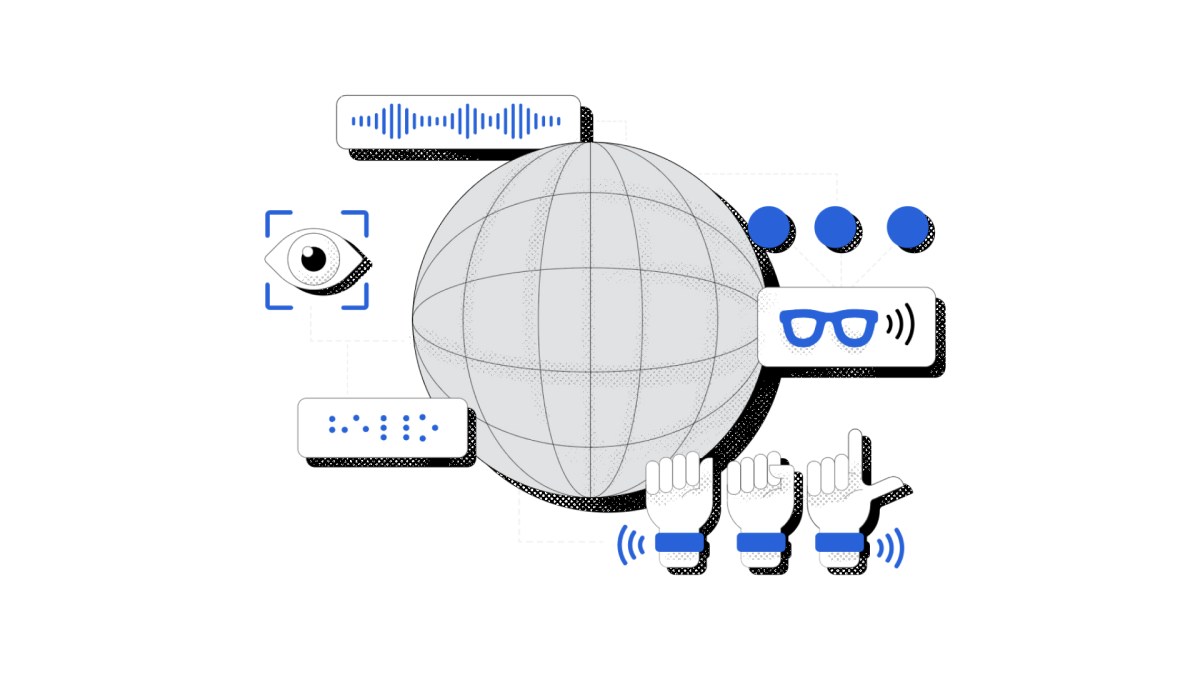
More than one billion people around the world live with some form of disability, and we’ve seen how our wearable AI is making a real difference for many of them — from enabling people who are blind to describe their surroundings to giving veterans with memory loss more confidence in daily routines. Today, ahead of Global Accessibility Awareness Day, we’re sharing how we’re building on that impact.
Donald Overton, a US Army veteran who lost his sight from a blast in Iraq while serving with the 82nd Airborne Division, uses his Meta AI glasses, developed in partnership with EssilorLuxottica, to navigate airports, read menus, and move through his day without the backpack full of assistive devices he used to carry.
“I can now go out to dinner with my wife and have a normal date night. I’m able to use the technology to read the menu to me, ” he said.
Noah Currier, a Marine Corps veteran with quadriplegia and founder of the Oscar Mike Foundation, uses Ray-Ban Meta glasses to capture photos and videos entirely by voice — something he says is “changing the game” for physically disabled people.
“I’m a quadriplegic, so my hands don’t work. I probably have fewer photos and videos in my phone than anybody else in the world,” he said. “Being able to take them hands-free was incredible. The very first thing I did was take a picture of my baby when I got home.”
Stories like these are what drive us to keep expanding what our AI glasses can do, including our latest features.
More Ways to Stay Connected
We’re rolling out new features on our AI glasses that give people more ways to navigate their day without needing to reach for their phone or tap on their frames.
Group calling and Service Directory with Be My Eyes: Building on our partnership with Be My Eyes, people who are blind or have low vision can now say “Hey Meta, Be My Eyes with [name]” to start a hands-free video call with a trusted friend or family member — rather than connecting with a sighted volunteer. You can also connect with specially trained support representatives from global brands like Tesco, Sony, Amtrak, and Hilton, who are equipped to provide visual descriptions and hands-on assistance with tasks.
Voice controls during calls: Soon you’ll be able to manage calls on WhatsApp, Messenger, Instagram, and Be My Eyes entirely by voice — muting, unmuting, turning your video on or off, or hanging up — all without touching your glasses or phone. For people with limited hand mobility, it means fewer barriers to staying connected.
One-touch shortcuts: You can now customize the action button on Ray-Ban Meta Optics styles or Oakley Meta Vanguard glasses for instant access to the features you use most — whether that’s connecting to a Be My Eyes volunteer or asking a Meta AI prompt like “describe what’s around me.” A single press replaces multi-step voice commands, putting AI a fingertip away.
Captioned calls: We recently introduced real-time captions during phone, WhatsApp, Facebook Messenger, and Instagram Direct voice calls on Meta Ray-Ban Display glasses that show what the other person is saying right on your in-lens display. Don’t miss a word and stay hands-free, even on a busy street or in a loud café — making calls more accessible wherever you are.
Third-Party Apps Built for Our AI Glasses
We’re already seeing incredible creativity from developers using the Meta Wearables Device Access Toolkit (DAT), and we can’t wait to see what they build next to make our AI glasses even more useful for everyone.
Our DAT gives developers a way to extend their mobile apps onto our AI glasses — and some of the first experiences are designed to help people with disabilities navigate daily life with more independence.
- OOrion helps blind and low-vision people locate objects, read text, detect obstacles, and understand their surroundings through real-time, hands-free AI assistance. Simply tell OOrion what you’re looking for, and it actively guides you toward it with live audio feedback as you move. Users can also scan and save personal items — such as keys, wallets, or phones — so they can easily find them later. Whether at home, at work, or on the go in partner locations such as hotels, museums, or stores, OOrion helps users navigate their environment independently and with confidence.
- Aira connects blind and low vision individuals with professionally trained Visual Interpreters, providing secure, on-demand support. By integrating with our AI glasses, Aira users receive real-time visual information based on their field of view while keeping both hands free for canes, guide dogs, and everyday tasks. Backed by enterprise-grade privacy and training standards, Aira enhances independence and empowers access on your terms.
Turning Muscle Signals Into Independent Control
Through a three-year partnership with Carnegie Mellon University, we’re exploring how electromyography (EMG) — the technology behind Meta Ray-Ban Display’s accompanying Meta Neural Band — can give people with spinal cord injuries new ways to interact with digital devices. The neural band detects subtle muscle signals in the forearm, even in people who have been paralyzed for many years, and translates them into actions like clicking, scrolling, or even steering in a video game.
In the video below, a participant named Cass with a spinal cord injury competes in a multiplayer racing game against a player using a standard controller — steering and boosting entirely through hand gestures captured by two Meta Neural Bands.
Accessibility in Action
We’re looking forward to hosting an event on Global Accessibility Awareness Day — May 21, 2026 — at Meta Lab NYC in partnership with Lighthouse Guild, a blind-led nonprofit with more than 120 years of service to the blind and low vision community, and Achilles International, the leading nonprofit that empowers athletes with disabilities through inclusive athletic experiences. People in the blind and low-vision community can experience our Oakley Meta Vanguard glasses firsthand through a Bike Club, showing how our wearable technology can unlock new possibilities in everyday athletic experiences. In March, Lighthouse Guild CEO Thomas Panek, who is blind, completed the New York City Half Marathon with the help of Oakley Meta Vanguard glasses.
We’re committed to building technology that’s accessible to everyone from the start. These updates are one step in that work, and we’re excited to share more as we continue to expand what’s possible for people with disabilities.