Open science is critical to advancing medical research. To accelerate this progress, we’ve expanded our academic partnerships, giving researchers funding and access to our AI models like Muse Glimmer, SAM3, DINOv3, and Brain2Qwertyv2. These researchers are independently adapting our models for their own investigational research. Here are a few of the projects that are benefitting from our partnership:
Training Doctors in Virtual Reality
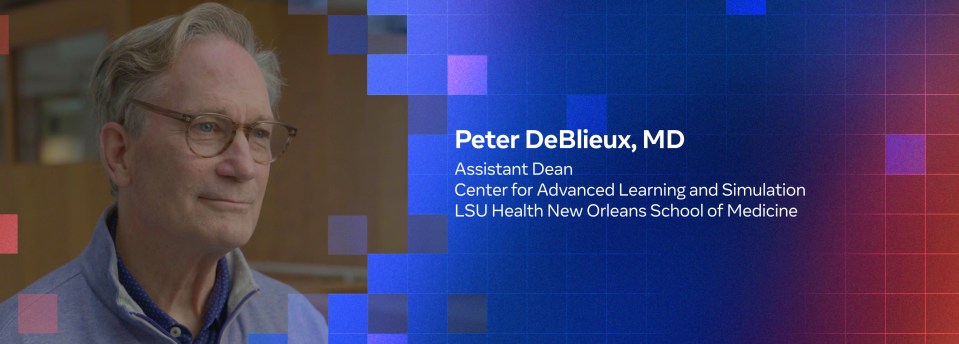
At Louisiana State University, Dr. Peter DeBlieux and his team are using Muse Glimmer, SAM 3, DINOv3, and other models from Meta, along with Meta Quest 3 headsets to develop COPES, an experimental coaching platform that supports healthcare professionals with medical procedural training in virtual reality. The system will aim to provide adaptive guidance, real-time performance assessment, and personalized feedback across technical execution, patient communication, clinical reasoning, and decision-making. Working virtually means medical students can learn complicated procedures in situations where practicing on real patients may be risky, and virtual instruction means more medical professionals can receive high quality technical and communications training — no matter where they are.
Helping Doctors Find the Source of Epilepsy
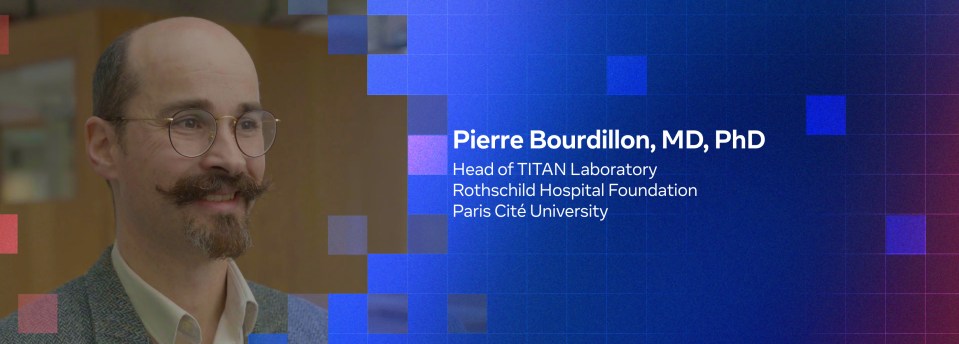
Dr. Pierre Bourdillon at Rothschild Hospital Foundation is using AI research and models from Meta including NeuralSet, Brain2Qwertyv2, Tribev2, and DINOv3, in research projects aimed at better understanding the source of epilepsy in the brain. Currently, epilepsy can’t be directly visualized in brain images, making it difficult for clinicians to identify its source. Dr. Bourdillon is using AI to develop a tool that can enable simulations of epileptic seizures originating in different regions of the brain. This approach could one day enable doctors to select the simulation that best matches their patient’s case, allowing them to form a strong hypothesis about where the patient’s epilepsy originates. This early-stage research could improve accuracy in a range of epilepsy treatments, including surgical removal of affected brain tissue and device implantation designed to disrupt epileptic activity. The simulations also have the potential to help researchers address speech and motor restoration in patients with brain injuries.
Improving Our Understanding of Rare Diseases
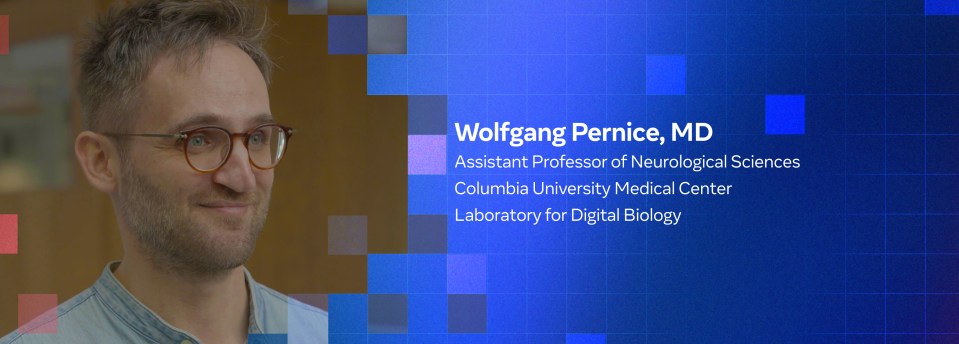
At Columbia University, Dr. Wolfgang Pernice has partnered with Meta to adapt the DINO family of models to improve analysis of microscopy images of cells, helping doctors understand how rare diseases appear in cells. In conventional image analysis methods, researchers have to know what they are looking for in advance, limiting their analysis. But the adapted Cell-DINO, DINO-BoC, and FINO models generate unbiased representations of the inner workings of cells, allowing scientists to decode the complex patterns by which rare diseases manifest in human cells. This can help improve our understanding of rare diseases and accelerate drug discovery.
Each of these investigational projects highlights AI’s unique ability to fill critical research gaps. While all of the work featured here is early-stage, we look forward to the potential breakthroughs enabled by our AI models. To learn more about our Open Source AI for Science Summit, where we interviewed the researchers, head to our AI blog.