Understanding consumer rewards programs in the USA is the first step toward turning your everyday spending into real financial value. Whether you are checking out at your local grocery store, booking a cross-country flight, or simply buying a morning coffee, you have likely been asked a familiar question: “Are you a rewards member?”
In the United States, earning perks for your everyday spending is no longer just a nice bonus; it is an integral part of the modern shopping experience. But with thousands of different programs, apps, and credit cards competing for your attention, navigating this landscape can feel overwhelming. It is a massive, multi-billion-dollar ecosystem designed to influence how, where, and when you spend your money.
In this comprehensive guide, we will break down everything you need to know about consumer rewards in the USA. From understanding complex point systems to protecting your personal data, you will learn how to strategically leverage these programs to keep more money in your wallet.
The Core of Consumer Rewards Programs
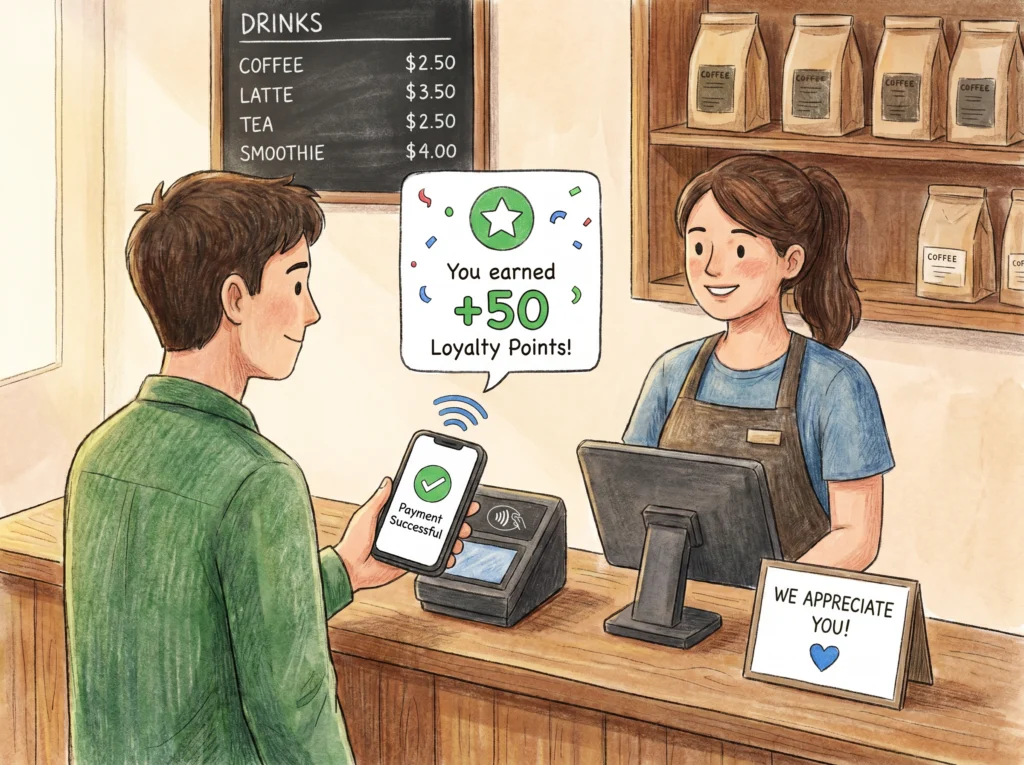
At its most basic level, consumer rewards are incentives offered by businesses to encourage repeat purchases. While the concept started decades ago with simple paper punch cards, today’s consumer rewards programs are highly sophisticated digital ecosystems.
When you look at the sheer volume of loyalty points distributed by US retailers, the numbers are staggering. Airlines, hotels, gas stations, supermarkets, and boutique retailers all have their own proprietary currencies, and knowing how each one works gives you a significant edge.
Understanding Customer Loyalty Program Benefits
Why do businesses give away “free” money, flights, and products? The answer lies in data and retention.
The primary business benefits of loyalty programs revolve around measuring customer lifetime value (CLV). Brands know that acquiring a new customer is significantly more expensive than keeping an existing one. By offering consistent incentives, companies encourage you to return to them rather than shopping around with competitors. This strategy is all about building brand affinity through incentives — creating an emotional and financial tie between the consumer and the brand.
For the consumer, the benefits are clear:
- Discounts on future purchases
- Free products or upgrades
- Early access to sales
- Exclusive member-only perks
Navigating the World of Rewards Credit Cards
You cannot talk about consumer rewards programs in the USA without diving into rewards credit cards. Financial institutions partner with retailers, airlines, and payment networks to offer lucrative kickbacks on everyday spending. For financially responsible consumers who pay their balances in full each month, these cards are powerful tools.
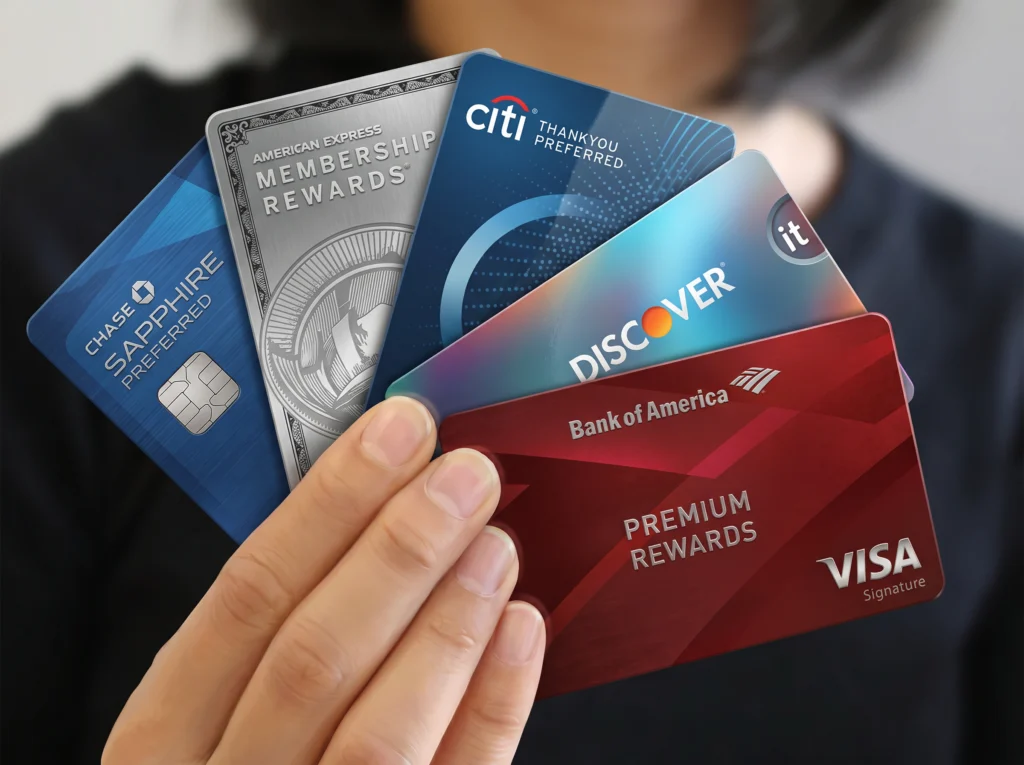
When consumers enter this space, their first question is usually: which cards offer the best sign-up bonuses? Banks frequently offer massive influxes of points (sometimes worth hundreds of dollars) if you spend a certain amount within the first few months of opening an account. However, to truly benefit, you need to understand the long-term value of the card.
Cash Back vs Travel Rewards
The great debate in the credit card world is cash back vs. travel rewards. Which one is right for you?
- Cash Back: These are straightforward and user-friendly. If your card offers 2% cash back, spending $100 earns you $2. You can usually apply this directly to your credit card statement or deposit it into a bank account. It is flexible, predictable, and requires zero mental gymnastics to use.
- Travel Rewards: These earn points or miles that can be redeemed for flights, hotel stays, or rental cars. While they require more effort to manage, travel points often yield a significantly higher value when redeemed strategically, especially for premium cabin flights or luxury hotel stays.
How to Maximize Credit Card Points
Learning how to maximize credit card points is an art form. To get the most out of your spending, you need to understand reward valuation and redemption math.
Not all points are created equal. A single point might be worth 0.5 cents when redeemed for merchandise on a bank’s portal, but 2 cents or more when transferred directly to an airline partner for an international flight.
Actionable tips for maximizing your consumer rewards:
- Use the Right Card for the Right Purchase: Many cards offer “category multipliers” (e.g., 4x points on dining, 3x on travel, 1x on everything else). Carry a combination of cards to maximize every dollar you spend.
- Transfer Points to Partners: Instead of booking travel directly through a bank’s portal, see if transferring your points to a specific airline or hotel loyalty program yields a higher cent-per-point value.
- Never Redeem for Merchandise: Redeeming credit card points for electronics or gift cards generally offers the lowest possible mathematical value for your points.
Modern Tech: Apps, Digital Coupons, and Card-Linked Offers
Beyond credit cards, the smartphone revolution has completely transformed how we save money on everyday purchases like groceries and clothing.
Rebates, Apps, and Digital Savings
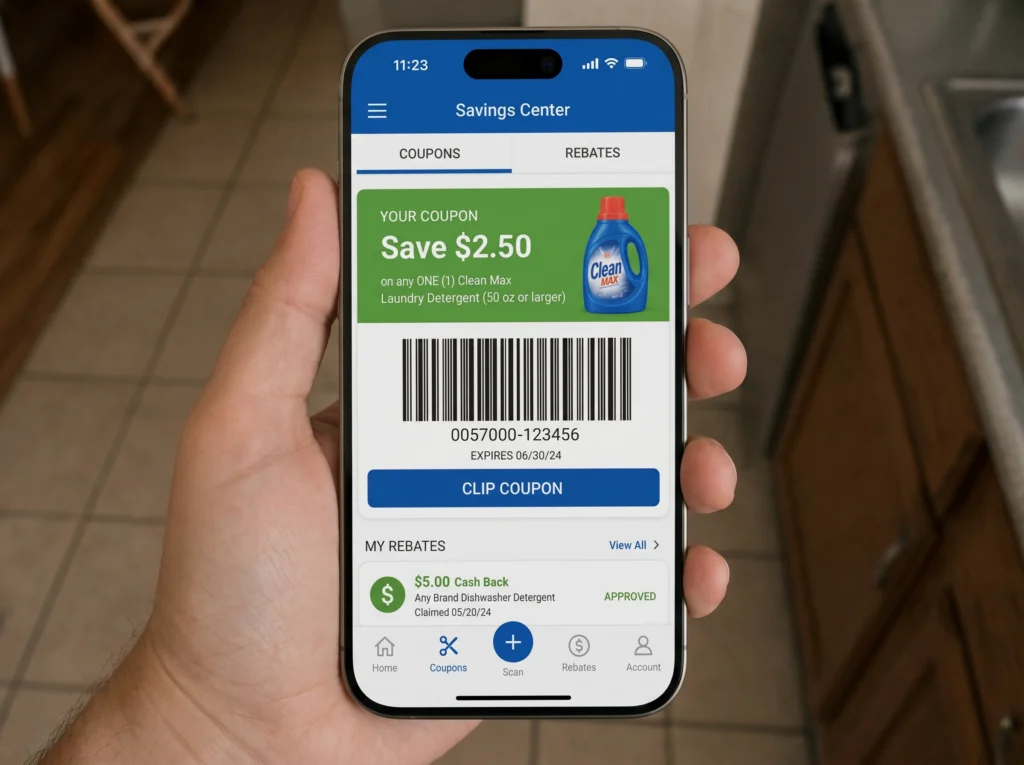
Savvy shoppers are consistently looking for the best mobile rebate apps, such as Ibotta, Fetch Rewards, or Rakuten. These apps allow you to scan your receipts or click through specific links before shopping online to earn cash back on everyday purchases.
It is important to understand the difference between a rebate and a discount. A discount lowers the purchase price at the point of sale. A rebate requires you to pay the full price upfront, and you are refunded a portion of the purchase price later.
Similarly, redeeming digital coupons for savings has largely replaced Sunday newspaper coupon clipping. Major supermarkets now have apps where you can virtually “clip” manufacturer and store coupons directly to your loyalty account, automatically applying the discount at the register.
The Rise of Card-Linked Offer Technology
One of the most seamless ways to earn rewards today is through card-linked offer technology. Programs like Dosh, or the merchant offers built into Amex and Chase credit card portals, allow you to link a specific discount directly to your credit or debit card. When you swipe that card at a participating merchant, the system recognizes the transaction on the backend and automatically credits your account with the advertised cash back or bonus points. There are no coupons to show the cashier and no receipts to scan.
The Mechanics of Modern Loyalty Systems
Brands invest heavily in the psychology of shopping. By structuring their programs in specific ways, they keep consumers engaged, entertained, and continually striving for the next reward.
Tiered Membership Structures Explained
Have you ever found yourself spending an extra $20 at a cosmetics store just to reach the “Platinum” level? If so, you have experienced the power of tiered loyalty.
With tiered membership structures, brands create hierarchical levels (e.g., Silver, Gold, Diamond) based on how much a consumer spends annually.
- Base Tier: Free to join, offers basic point accumulation and birthday gifts.
- Middle Tier: Requires moderate spending, unlocks better point multipliers and free shipping.
- Top Tier: Requires heavy spending, offering VIP customer service, early access to exclusive products, and massive point bonuses.
This structure taps into human psychology, creating a sense of exclusivity and status that encourages shoppers to consolidate their spending with one brand.
Gamification in Retail Marketing
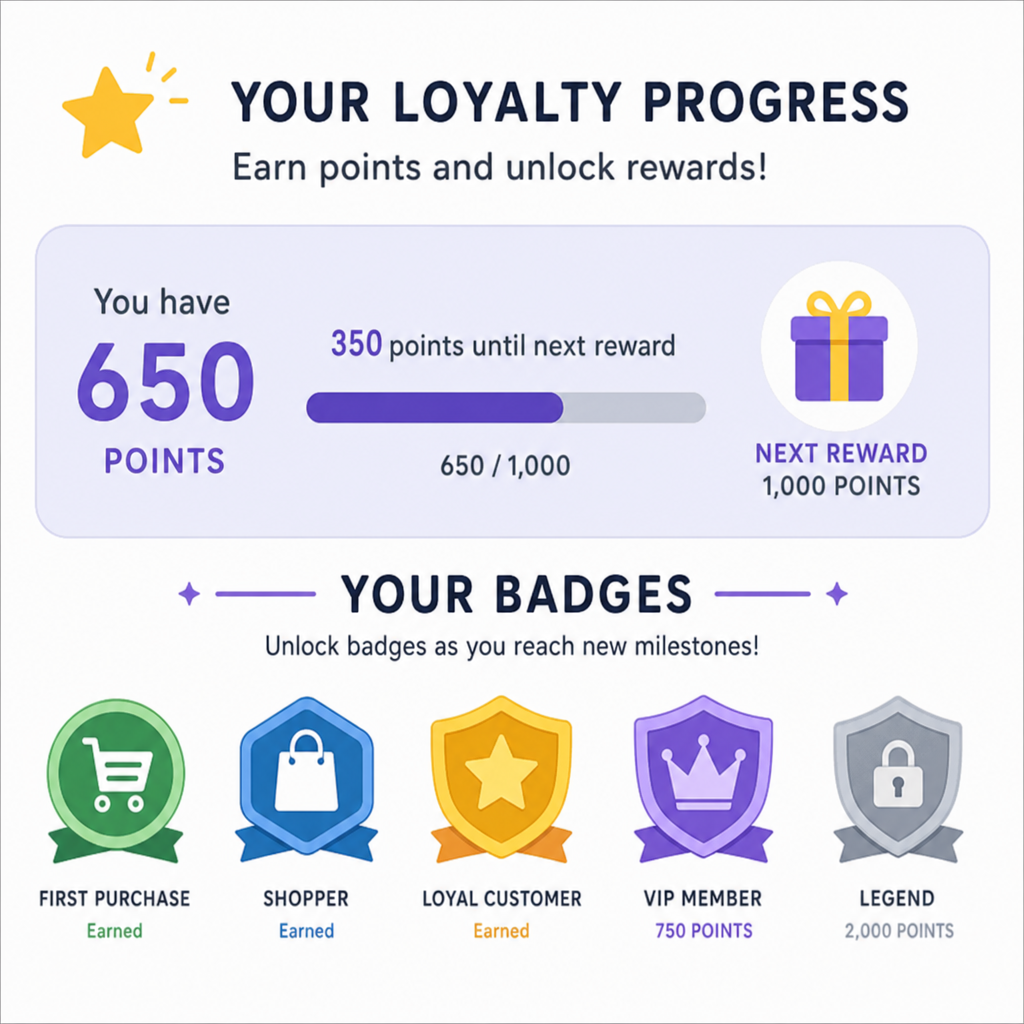
Another major trend shaping consumer rewards programs in the USA is gamification in retail marketing. Brands are turning the act of shopping into a game. You might see this as “spin-to-win” wheels on e-commerce sites, badges you can unlock in a coffee shop app for trying new drinks, or weekend “point quests” that challenge you to buy three specific items for a massive bonus. By making loyalty programs fun and interactive, companies drastically increase app engagement and spontaneous purchases.
This intersection of mobile gaming mechanics and real-world rewards is increasingly powerful. Platforms that embed gaming-style engagement (leaderboards, challenges, streaks) inside loyalty ecosystems are seeing measurable lifts in retention and incremental transaction volume.
Game Discovery Within Loyalty Programs
A more sophisticated evolution of this model goes beyond building game-like features inside a loyalty app. Instead, forward-thinking loyalty programs are connecting their members to an entire ecosystem of real, established mobile games; letting users discover, explore, and play games they genuinely enjoy, and earn loyalty rewards for doing it.
The key distinction here is significant: the loyalty program does not have to build or maintain any game itself. Instead of designing its own mini-games from scratch — which requires ongoing development resources, content refreshes, and player retention strategy — the program taps into games that are already well-built, well-loved, and actively played. Members browse a curated catalog of mobile games, try the ones that interest them, hit milestones inside those games, and earn points or rewards that flow directly back into the loyalty program they already belong to.
This model creates a genuine value exchange on multiple levels:
- For the member: They get rewarded for leisure time they were already spending. Playing a mobile game they enjoy now has tangible real-world value — points toward a flight, cash back on groceries, or a discount at their favorite retailer.
- For the loyalty program: Engagement happens between purchase cycles, not just at the point of sale. Members are interacting with the brand daily through gameplay, deepening the loyalty relationship without requiring a transaction every time.
- For the game: Reaching new players through a trusted loyalty platform they already use drives meaningful, high-quality installs from users who are genuinely motivated to engage.
The result is a loyalty experience that feels like a natural extension of how people already spend their time not a marketing mechanism they have to remember to engage with. For loyalty programs looking to drive higher daily engagement and stand out from standard earn-and-burn models, connecting members to a curated mobile gaming ecosystem is emerging as one of the most effective strategies available.
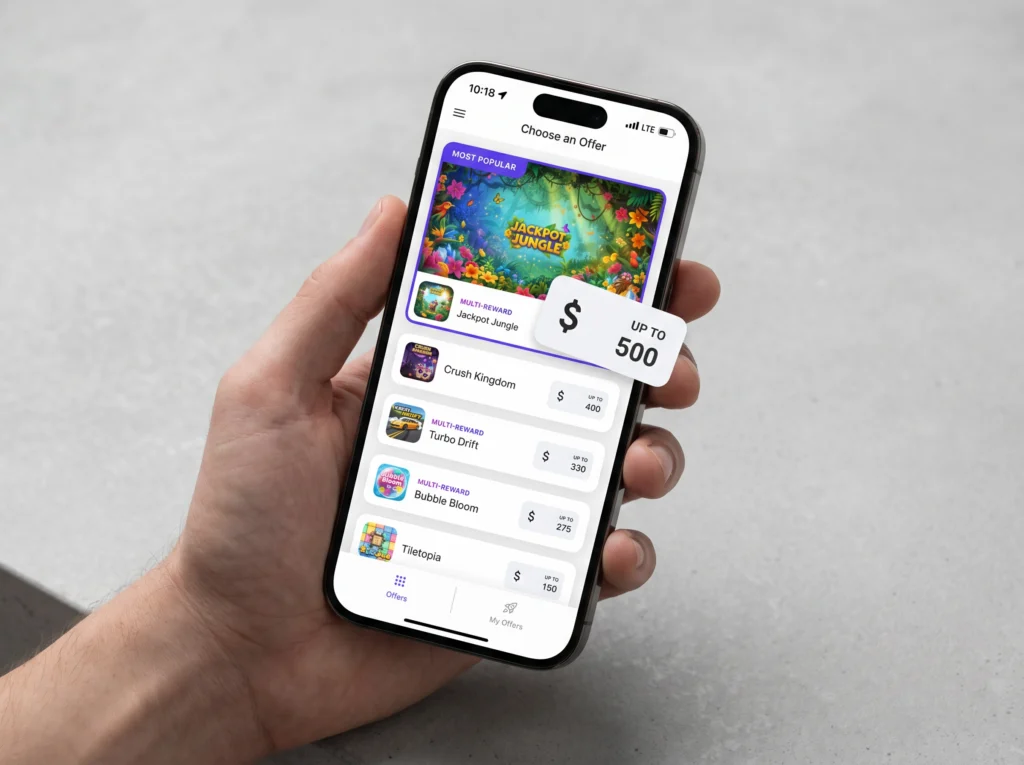
 in action
Emerging Trends in Consumer Rewards Programs
The landscape of consumer rewards in the USA is evolving rapidly. Here are the trends reshaping how brands build loyalty and how consumers earn value.
Mobile-First Loyalty and In-App Rewards
Increasingly, consumer rewards programs are built around the mobile app as the primary engagement surface. Rather than physical cards or web portals, brands are designing loyalty experiences that live natively on your phone — with push notifications for bonus point opportunities, geofenced offers when you walk near a store, and seamless one-tap redemption at checkout. The result is a more immediate, personalized rewards experience that keeps members engaged between purchases.
AI-Powered Personalization in Loyalty Programs
Artificial intelligence is fundamentally changing how consumer rewards programs deliver value. Instead of one-size-fits-all promotions, AI-driven platforms analyze your purchase history, browsing behavior, and engagement patterns to surface offers that are highly relevant to you specifically. A customer who buys organic groceries and running shoes will see completely different bonus point offers than a customer who shops primarily for electronics. This level of personalization increases redemption rates and deepens brand loyalty.
Embedded Rewards and Value Exchange Models
A newer model gaining traction is embedded rewards — where loyalty points and incentives are built into experiences you’re already having, rather than requiring a separate action. Mobile gaming apps, streaming platforms, and financial apps are increasingly embedding rewards directly into their product experience, creating what the industry calls a “value exchange”: the user engages with content or completes an action, and earns real, redeemable rewards in return. This model drives higher engagement than traditional earn-and-burn point systems because the reward feels immediate and connected to something the user was already doing.
Pitfalls and Best Practices for Consumers
While consumer rewards offer incredible value, they are not without their traps. Brands constantly tweak their terms and conditions, and failing to pay attention can cost you the perks you have rightfully earned.
Avoiding Point Expiration in Consumer Rewards Programs
One of the most frustrating experiences for a consumer is logging into an account only to realize their hard-earned points have vanished. Most programs dictate that points will expire after a certain period of account inactivity — often 12 to 24 months.
- Keep points alive: You usually do not need to fly or stay at a hotel to keep travel points active. Simply earning or redeeming a single point can reset the expiration clock. You can do this by using a co-branded credit card, buying a small item through the program’s online shopping portal, or donating a few points to charity.
- Track your balances: Consider using a spreadsheet or a reward-tracking app to keep an eye on your balances and expiration dates.
Data Privacy in Consumer Loyalty Schemes
Finally, consumers must be aware that rewards programs are not charities; they are highly effective data-mining operations. When you sign up for a grocery store card or a retail app, you are allowing that company to track your purchasing habits down to the exact brand of cereal you buy. Data privacy in loyalty programs has become a major talking point in recent years. Companies aggregate your shopping data, analyze your habits, and often sell anonymized versions of this data to third-party advertisers or manufacturers.
If privacy is a major concern for you, take the following steps:
- Read the terms of service: Understand exactly what data is being collected and with whom it is shared.
- Opt out of third-party data sharing: Check your account settings whenever possible.
- Use a dedicated email address: A separate “junk” email for your loyalty programs prevents your primary inbox from being flooded with marketing emails.
- Do the math on value vs. privacy: Decide if the financial discount is genuinely worth the personal data you are handing over. For a $50 flight discount, it might be; for a free 50-cent donut, you might prefer to pay in cash and remain anonymous.
Frequently Asked Questions About Consumer Rewards Programs in the USA
What are consumer rewards programs?
Consumer rewards programs are structured loyalty initiatives offered by businesses that give customers points, miles, cash back, or perks in exchange for repeat purchases. They are designed to increase customer retention, collect purchase data, and build long-term brand affinity.
How do tiered loyalty programs work?
Tiered loyalty programs assign members to levels — such as Silver, Gold, or Platinum — based on how much they spend in a given period. Higher tiers unlock better benefits, such as bonus point multipliers, free shipping, VIP customer service, and exclusive early access to sales. The tiered structure motivates consumers to increase their spending in order to unlock or maintain a higher status level.
What is the difference between cash back and travel rewards?
Cash back rewards return a flat percentage of your spending directly as money — usually applied to your statement or deposited to a bank account. Travel rewards earn points or miles redeemable for flights, hotels, and rental cars. Cash back is simpler and more flexible; travel rewards can offer significantly higher value when redeemed strategically for premium travel.
How do I prevent my loyalty points from expiring?
Most loyalty programs expire points after 12 to 24 months of account inactivity. To keep your points alive, you typically only need to complete one qualifying activity — such as making a purchase, transferring points, or using a co-branded credit card — within the inactivity window. A reward-tracking app or spreadsheet can help you stay on top of expiration dates across multiple programs.
Are loyalty programs a data privacy risk?
Yes, to some extent. Consumer rewards programs are built on data collection. When you enroll, you typically agree to allow the company to track your purchase behavior, which is often analyzed internally and sometimes shared with third-party partners. To protect your privacy, read the program’s terms of service, opt out of third-party data sharing where available, and use a dedicated email address for loyalty program communications.
What is card-linked offer technology?
Card-linked offer technology allows consumers to link a discount or cash back offer directly to their credit or debit card. When the cardholder makes a qualifying purchase at a participating merchant, the reward is automatically applied to their account — no coupon codes or receipt scanning required. Platforms like Dosh and merchants offer Amex and Chase programs; use this technology.
What is embedded rewards or value exchange in loyalty programs?
Embedded rewards is a model where loyalty incentives are built directly into an experience — such as a mobile game, a streaming app, or a financial platform — rather than requiring a separate action. The value exchange model means a user earns real, redeemable rewards simply by engaging with something they were already doing. This approach drives higher engagement and retention than traditional earn-and-burn point systems.
Can loyalty programs let members earn rewards by playing mobile games?
Yes, and it is one of the fastest-growing engagement strategies in loyalty. Rather than building their own in-app games from scratch, loyalty programs can connect members to a curated catalog of established mobile games. Members discover and play games they enjoy, earn points or rewards by reaching in-game milestones, and redeem those rewards within the loyalty program. The program benefits from daily engagement between purchase cycles; the member gets rewarded for leisure time they were already spending.
Conclusion: Spending Smart in a Rewarded World
The landscape of consumer rewards programs in the USA is rich, complex, and incredibly rewarding for those who know how to navigate it. Whether you are weighing the benefits of travel miles over cash back, stacking mobile rebate apps with digital coupons, or strategically climbing the elite tiers of your favorite retailer, there is undeniable value to be found.
By understanding the math behind your redemptions, taking advantage of modern card-linked technologies, staying ahead of emerging trends like AI personalization and embedded rewards, and remaining vigilant about point expirations and data privacy, you can transform your everyday spending into a powerful engine for savings and perks.
If you’re a publisher, platform, or rewards program exploring new ways to engage your loyalty members, AdAction’s AdGem Play leverages mobile gaming behavior to drive engagement, retention, and incremental revenue. Learn more here.
The post Understanding Consumer Rewards Programs in the USA appeared first on AdAction.