
Black Friday is no longer just a shopping day. It’s advertising season, it’s the final push to close out the year and hit the projections.
With Black Friday falling on November 27 and Cyber Monday on November 30, the 2026 holiday shopping season is approaching fast. But consumer behavior is already shifting, and advertisers are adapting their strategies to reach shoppers earlier, across more channels, and closer to the moment of purchase.
We all know this creates a major revenue opportunity. Yet capturing it requires more than offering premium inventory during peak shopping days.
Advertising budgets are more fragmented and competition for consumer attention intensifies, publishers need to make their inventory easier to discover, buy, and activate.
Here’s what is shaping Black Friday advertising in 2026 and how publishers can turn these trends into growth.
1. The Black Friday Shopping Season Starts Earlier Than Ever.
The traditional Black Friday weekend is expanding into a much longer shopping period, turning from one day,to the weekend,to spanning the entire week.
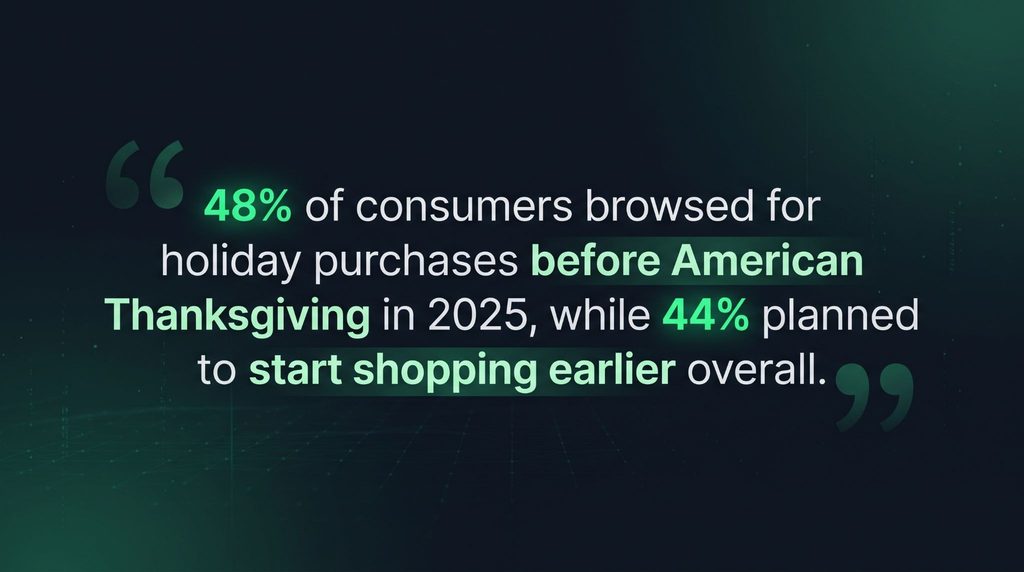
According to Circana’s 2026 holiday advertising research, 48% of consumers browsed for holiday purchases before American Thanksgiving in 2025, while 44% planned to start shopping earlier overall.
For advertisers, this means building awareness and influencing purchase decisions well before November 27.
For publishers, it creates opportunities to monetize consumer attention throughout the shopping journey, not just during peak promotional days.
How publishers can capitalize.
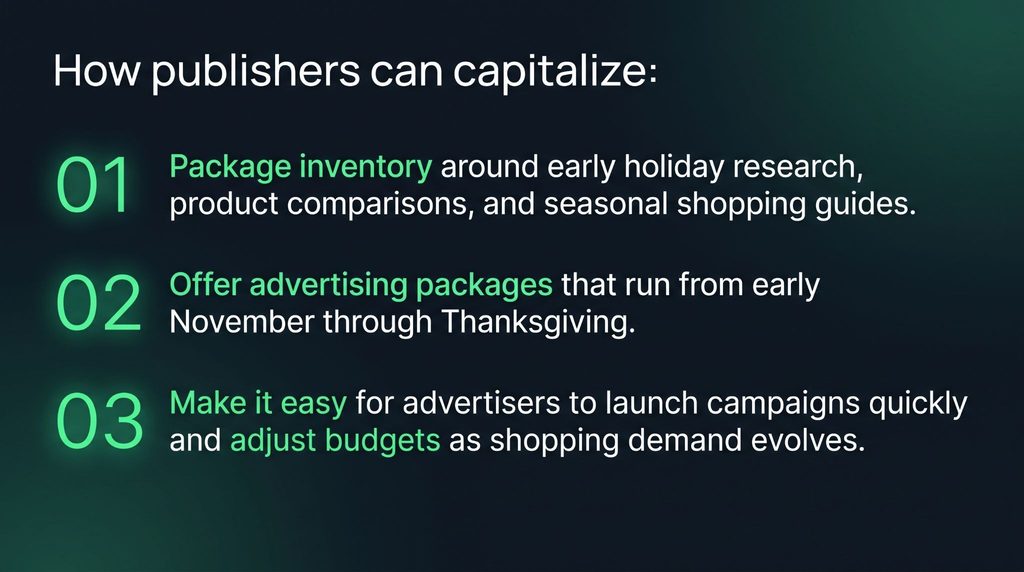
- Package inventory around early holiday research, product comparisons, and seasonal shopping guides.
- Offer advertising packages that run from early November through Thanksgiving.
- Make it easy for advertisers to launch campaigns quickly and adjust budgets as shopping demand evolves.
Publishers that activate advertiser demand earlier can capture revenue across a longer seasonal window.
2. AI Is Changing How Consumers Discover Products.
AI-powered discovery is becoming an increasingly important part of the shopping journey. Adobe’s 2026 Holiday Shopping Forecast reports that AI-driven traffic to retail websites grew 127% year-over-year in August 2026, with further growth expected during the holiday season.
Consumers are increasingly using AI tools to research products, compare options, and find deals before making purchasing decisions.
This shift is changing how brands think about visibility. Traditional search and social advertising remain important, but advertisers must now consider how their products appear across AI-assisted discovery journeys.
For publishers, the opportunity goes beyond AI-driven traffic. High-quality content, trusted editorial environments, contextual relevance, and well-defined audience segments can help advertisers reach consumers while they are researching and evaluating purchases.
Publishers can strengthen their seasonal advertising offering by organizing inventory around shopping intent, product categories, and relevant content environments.
As AI changes how consumers discover products, publishers that make their advertising opportunities easier to find and understand will be better positioned to capture emerging demand.
3. CTV and Streaming Are Becoming Holiday Advertising Priorities
Black Friday campaigns are no longer limited to search, social, and display.
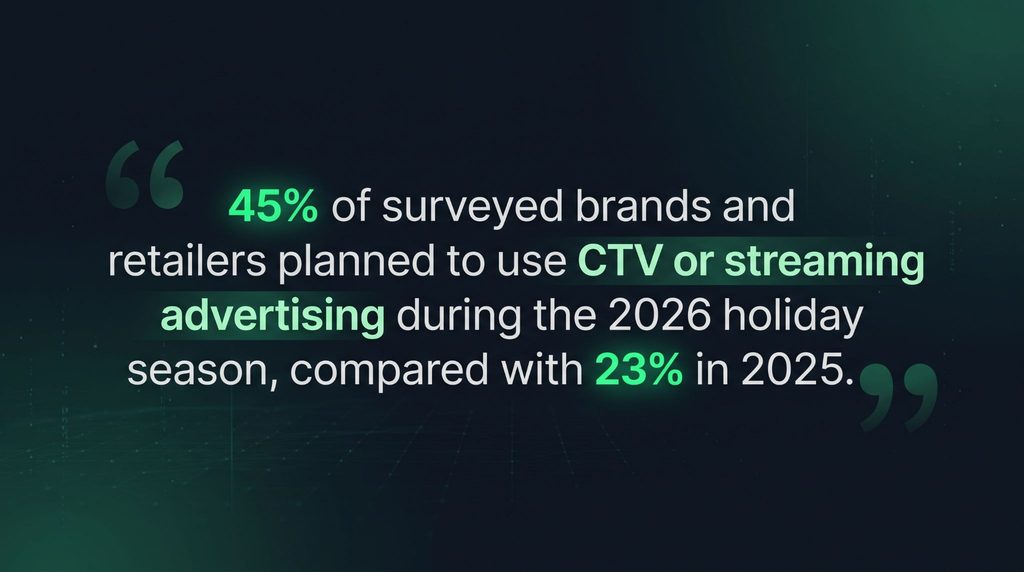
CTV and streaming environments are becoming increasingly attractive to advertisers seeking to combine broad reach with more targeted digital advertising capabilities. According to Digiday’s 2026 holiday marketing research, 45% of surveyed brands and retailers planned to use CTV or streaming advertising during the 2026 holiday season, compared with 23% in 2025.
This growing need creates opportunities for broadcasters, streaming platforms, and publishers with premium video inventory.
Traditional TV advertising buying processes can remain complex, particularly for smaller advertisers working with limited budgets and tight campaign timelines. Self-serve advertising/ad manager platforms can help reduce these barriers by allowing advertisers to explore available inventory, select advertising packages, and launch campaigns through simplified buying workflows.
For publishers, making premium video inventory more accessible can open the door to new advertiser segments and incremental revenue.
4. Solving the Q4 Ad Squeeze: Turning Priced-Out SMBs into Direct Publisher Revenue
During Black Friday, mega-retailers flood search and social platforms with massive budgets, triggering intense competition and sending auction CPMs soaring by 30% to 50%. For regional businesses, independent retailers, and emerging DTC brands, customer acquisition on walled gardens becomes unsustainable almost overnight.
They are not sitting out the holiday season; they are looking for predictable, brand-safe alternatives.
By offering direct self-serve access through ad manager platforms, publishers can position their authenticated, first-party audience environments as a stable alternative to volatile social feeds. An automated ad manager turns high-intent holiday traffic spikes into real-time revenue, enabling fast-moving advertisers to launch targeted campaigns in minutes rather than waiting on multi-day sales cycles.
Crucially, this is not just a seasonal windfall – it is your most cost-effective advertiser acquisition window. As demonstrated by Nine Ad Manager, opening television inventory to over 2.5 million Australian SMBs, lowering entry friction and simplifying creative intake turns priced-out holiday advertisers into immediate buyers, establishing an onboarded roster of direct accounts that continue spending long after the holiday rush ends.
5. Speed and Flexibility Will Define Holiday Advertising Success.
Holiday advertising moves quickly. Promotions change, new deals emerge, and brands need to react to consumer demand in real time.
Artificial intelligence and agentic AI have become major priorities for media buyers, with the industry increasingly focused on applying automation to campaign execution.
For publishers, the message is clear: reducing operational friction is becoming a competitive advantage. Advertisers want the flexibility to launch campaigns without unnecessary delays, monitor performance, and adjust their strategies while opportunities are still relevant.
The Strategic Advantages of Modern Ad Manager Platforms:
- Faster campaign activation. Reduce manual steps between campaign planning and launch.
- Flexible buying options. Support advertisers with different budgets, objectives, and campaign durations.
- Greater transparency. Give advertisers clearer access to available products, pricing, and campaign reporting.
- Simplified campaign management. Enable advertisers to manage and optimize campaigns through an accessible interface.
During a time-sensitive shopping season, a smoother buying experience can make the difference between capturing advertiser demand and missing it.
How Publishers Can Prepare for Black Friday 2026.
With the holiday shopping season approaching, publishers should focus on three priorities.
- Make inventory easier to discover. Organize advertising opportunities around relevant audiences, seasonal shopping categories, and formats that advertisers can easily understand.
- Make campaigns easier to buy. Simplify the path from discovering available inventory to launching a campaign, particularly for advertisers with smaller budgets or limited resources.
- Make activation faster. Give advertisers the flexibility to respond to changing demand, adjust campaign strategies, and maximize opportunities across the entire holiday period.
The Bottom Line: Make Every Advertising Opportunity Count.
Black Friday 2026 will reward more than advertisers with the biggest budgets. It will also create opportunities for publishers that can connect brands with consumers at the right moment.
As AI reshapes product discovery, CTV attracts more holiday spending, and advertisers demand greater flexibility, the ability to simplify media buying becomes increasingly valuable.
For publishers, the opportunity is clear: reach more advertisers, reduce barriers to entry, and turn seasonal demand into incremental advertising revenue.
At DanAds, we help publishers simplify advertising sales through scalable self-serve technology, making it easier for advertisers of all sizes to discover, buy, and activate premium inventory.