Meta’s AI-optimized data centers and infrastructure are an investment in the future of the American economy. American AI is creating skilled jobs, increasing productivity, helping businesses grow, and advancing scientific research. As this transformative technology progresses, we believe it will become ever more valuable to us in our daily lives. But these aren’t just investments in technology — they’re investments in people and communities across the United States.
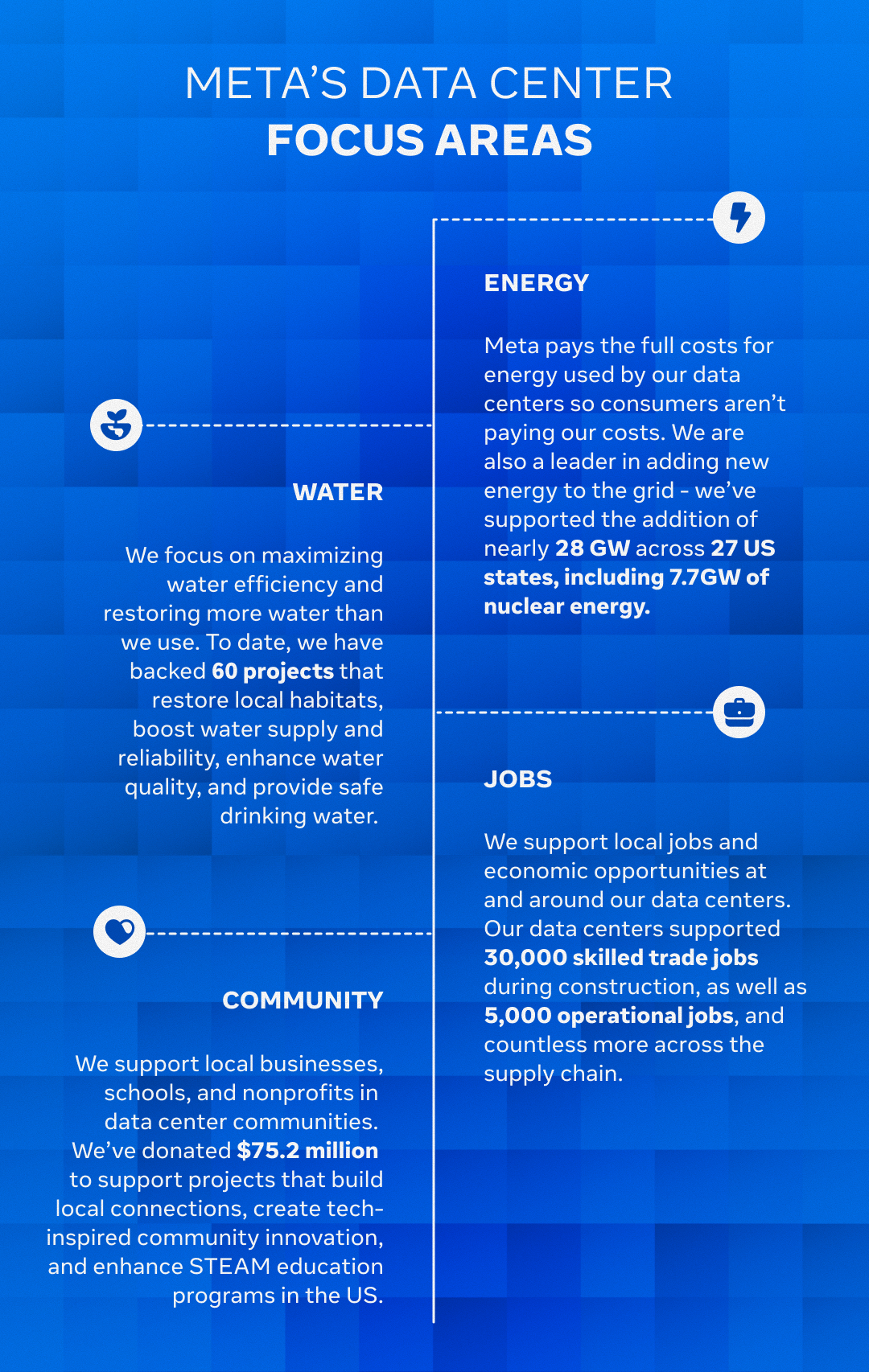
For 15 years, Meta has built and operated some of the most efficient and innovative data centers in the world, and we work hard to be a good neighbor in communities where we have data centers. We do this by focusing on four key areas: responsible energy use, supporting jobs and workforce development, minimizing our impact on water and the environment, and supporting community priorities, schools, and nonprofits.
Powering Innovation
Meta pays the full costs for the energy used by our data centers, so they aren’t passed on to consumers. We know data centers use a lot of energy, so we work closely with utilities to plan for and meet our energy needs years in advance of our data centers coming online, and on an ongoing basis afterwards. We pay for new and existing grid infrastructure needed to serve our data centers, so these costs don’t impact customers. This longstanding principle will continue to be a core part of our work as our infrastructure grows. We also publicly report on our annual energy usage for each operational data center.
We work with utilities and market operators who have a holistic understanding of local grids, meaning that they can plan for and procure the infrastructure needed to reliably serve all customers and ensure other customers are not negatively impacted by our energy use. This includes supporting rate structures like large load tariffs, a mechanism that ensures we pay for infrastructure added to benefit us — including new power sources and transmission lines — as well as our share of other grid infrastructure. Regulator-approved rate structures like these help ensure consumers are protected from shouldering the costs of infrastructure needed for our data centers.
Through our energy agreements, we’re helping utilities grow and modernize the grid to benefit everyone. And we’re committed to working with utilities and grid operators to support grid reliability during periods of emergency and heightened demand, including evaluating programs to reduce our grid energy usage at these times.
For more than a decade, we have helped add new energy to the grid. Through our agreements with energy companies, and additional energy purchases, we’ve supported major infrastructure projects benefitting the grids where we operate. These projects represent billions in domestic capital energy investments and hundreds of energy jobs, and make us one of the most significant purchasers of nuclear energy in American history.
Supporting Job Opportunities
We support local jobs and economic opportunities in communities where we have data centers and beyond, and in many data center communities we are among the biggest local employers. Our support for jobs and economic opportunity spans three key areas:
- Long-term operational and construction jobs: A typical data center represents a multi-billion investment in the local community, supporting long-term operational jobs for electricians, HVAC specialists, server and network techs, and engineers, as well as thousands of multi-year skilled trade jobs for steel workers, pipefitters, electricians, fiber technicians, foremen, and more. We work hand-in-hand with our community partners to hire local workers when and where we can.
- Jobs across the supply chain: Each year, we support billions of dollars in business for American employers that provide essential products for building and operating data centers.
- Workforce training policies and programs: We help people hone skills and connect them to job opportunities building and operating data centers and energy infrastructure. With our general contractors and national partners like Be Pro Be Proud, we partner with community colleges and technical schools to offer training programs for trades, ensuring community members have access to high-quality, future-ready careers in technology, operations, and skilled trades.
Prioritizing Water and Environmental Stewardship
Our goal is to be water positive in 2030, meaning we will restore more water than we consume in the watersheds in which we operate. We approach water stewardship with the responsibility and technical expertise it deserves. Our approach has three pillars:
- Minimizing water use: We design our data centers to minimize water use, and use water as efficiently as possible in our operations. For example, at our New Albany data center in Ohio, we’re cooling so efficiently that we use less than half the amount of water it takes to irrigate an average golf course in the southwest.
- Water restoration: We support projects that address shared water challenges in the watersheds where we operate.
- Transparency: We publish detailed information in our annual sustainability report about our water withdrawals, restoration projects, and progress toward becoming water positive.
As with energy, Meta pays the full cost associated with water and sewer usage to ensure our projects don’t negatively impact other customers. We’ve invested over $550 million in water and wastewater infrastructure supporting communities where our data centers are based. This includes any new infrastructure and enhancements needed to serve our data centers, which frequently strengthen community water resilience without passing on costs to ratepayers.
Beyond our water stewardship efforts, we focus on responsible development and management of the land where we have data centers. We preserve sensitive ecosystems and focus on supporting local native habitats through restoration and enhancement that complements and benefits the natural surroundings and regional character of the communities we build in.
Being a Good Neighbor
We’re proud to call the communities where we have data centers our home, and we want to make sure we’re giving back. As part of our work with local governments to plan for and meet our infrastructure needs, we fund upgrades to local infrastructure beyond the walls of our data centers, including public roads and other infrastructure that benefit all residents and support local economies.
We also contribute to important causes that benefit our communities. For example, the Meta Data Center Community Action Grant Program is an annual initiative that provides direct funding to schools, registered nonprofits, and community organizations in locations where Meta has data centers.
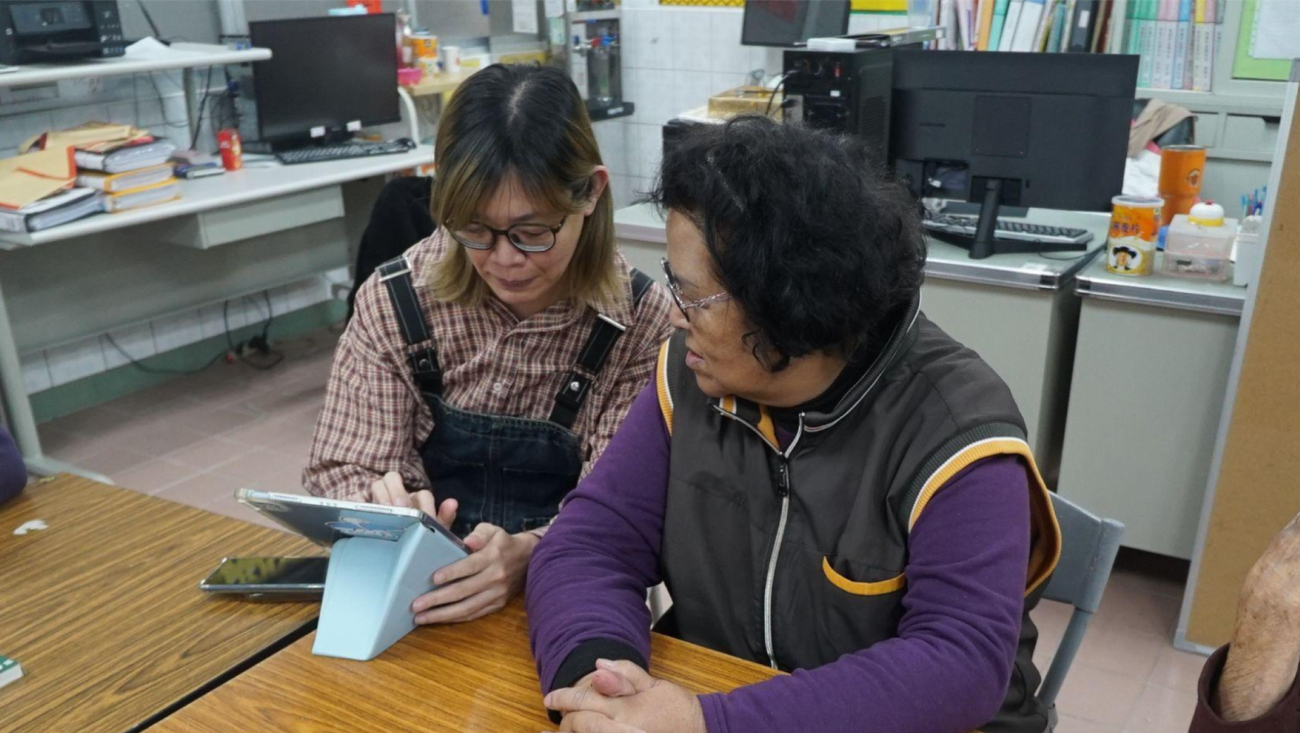
We provide free digital-skills training that supports local businesses, schools, and nonprofits in our data center communities. Through the White House AI Youth Education Pledge, we’re working with Pearson Education to build a suite of AI-powered tools to support teachers in districts serving military families.
We support local small businesses through Community Accelerator events that build digital skills and teach small businesses how to leverage AI tools, including Meta AI, to help them grow. And we support electricity bill assistance programs in each new data center community, aimed at helping low-income households cover their heating and cooling costs.
Our mission is to build the future of human connection, and our data centers make that possible. But they do so much more: support jobs, help schools and local communities thrive, and deliver economic impact. Learn more about Meta’s data center initiatives and our commitment to responsible growth at datacenters.atmeta.com.